


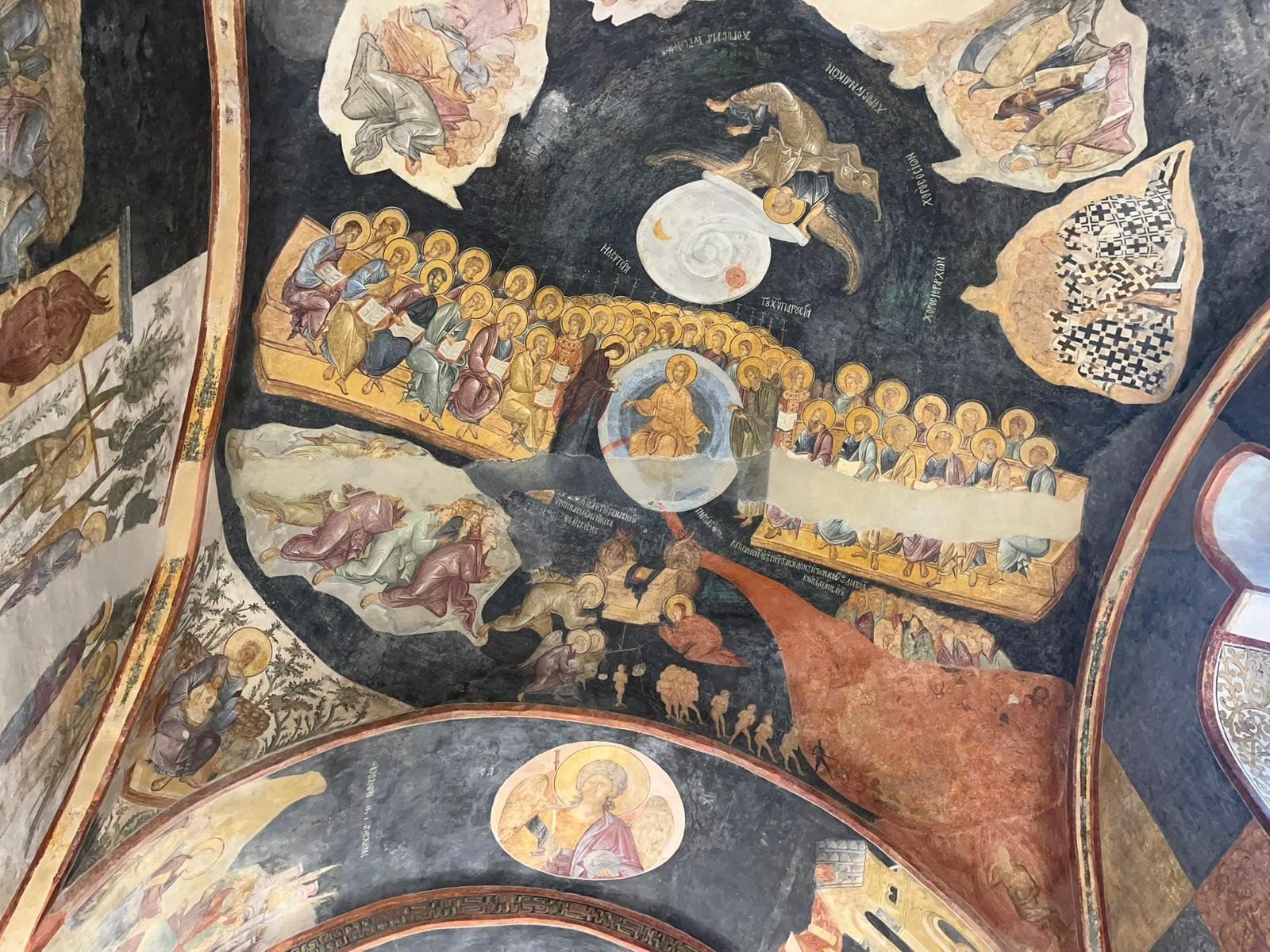
Tucked near the old city walls of Istanbul stands one of the most important monuments of Byzantine art: Kariye Mosque. Smaller than Hagia Sophia but artistically just as powerful, Chora is famous for its breathtaking mosaics and frescoes. It tells the story of Istanbul itself — Byzantine, Ottoman, Republican, and modern — all layered within one building. This guide will walk you through its name, history, architecture, art, and restoration in a clear and accessible way.
What Does “Chora” Mean? (Etymology Explained)
The word Chora comes from Greek and originally meant:
- Countryside
- Rural area
- Outside the city walls
When the first monastery was founded here in the 4th century, the area stood beyond the early city walls of Constantinople. Even after the massive Theodosian Walls expanded the city inthe 5th century, the name remained.
Over time, “Chora” gained a deeper theological meaning inside the church itself. In the mosaics:
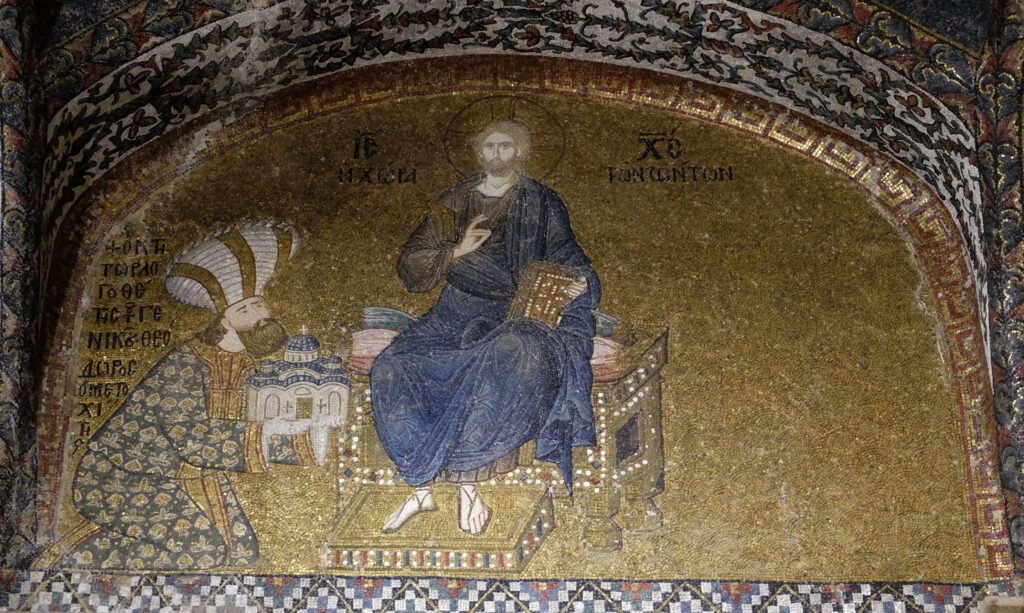
- Christ is called “Chora ton Zonton” — Land of the Living
- The Virgin Mary is called “Chora tou Achoretou” — Container of the Uncontainable
So the name evolved from a geographic description into a powerful spiritual metaphor.
The Ottoman version of the name became Kariye, which is still used today.
How Old Is Chora Mosque?
Chora’s story begins in the 4th century with a small monastic church.
Key building phases include:
- 6th century – Reconstruction under Justinian I
- 11th–12th centuries – Rebuilding during the Komnenian dynasty
- Early 14th century (c. 1315–1321) – Major artistic renovation under Theodore Metochites
The mosaics and frescoes you see today mostly date from the early 1300s — meaning they are over 700 years old.
The Architecture: Understanding the Layout
Chora follows the traditional Byzantine church plan with added spaces that enrich its artistic program.
Outer Narthex
The first entrance hall. Its mosaics tell scenes from the life of Christ.
Inner Narthex
One of the most impressive mosaic cycles in Byzantine art. Highlights include:
- The genealogy of Christ
- Scenes from the life of the Virgin Mary
- Christ Pantocrator
- The famous donor portrait of Theodore Metochites
Naos (Main Space)
The central worship area. Today it functions as a mosque prayer hall.
Parecclesion (Funerary Chapel)
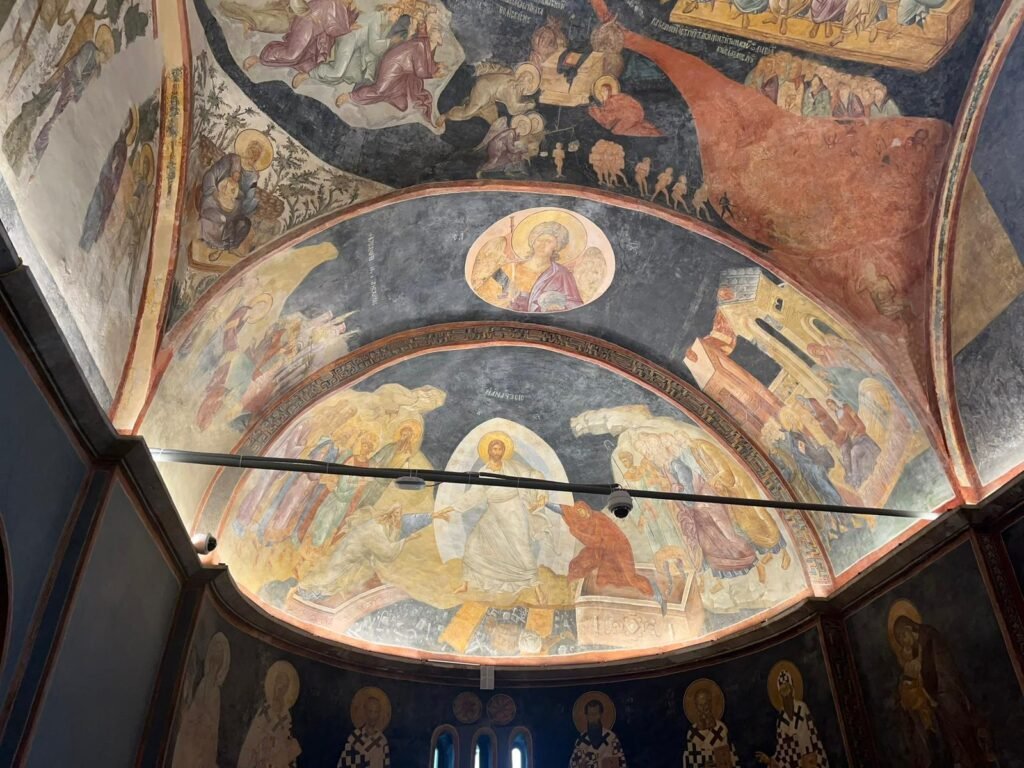
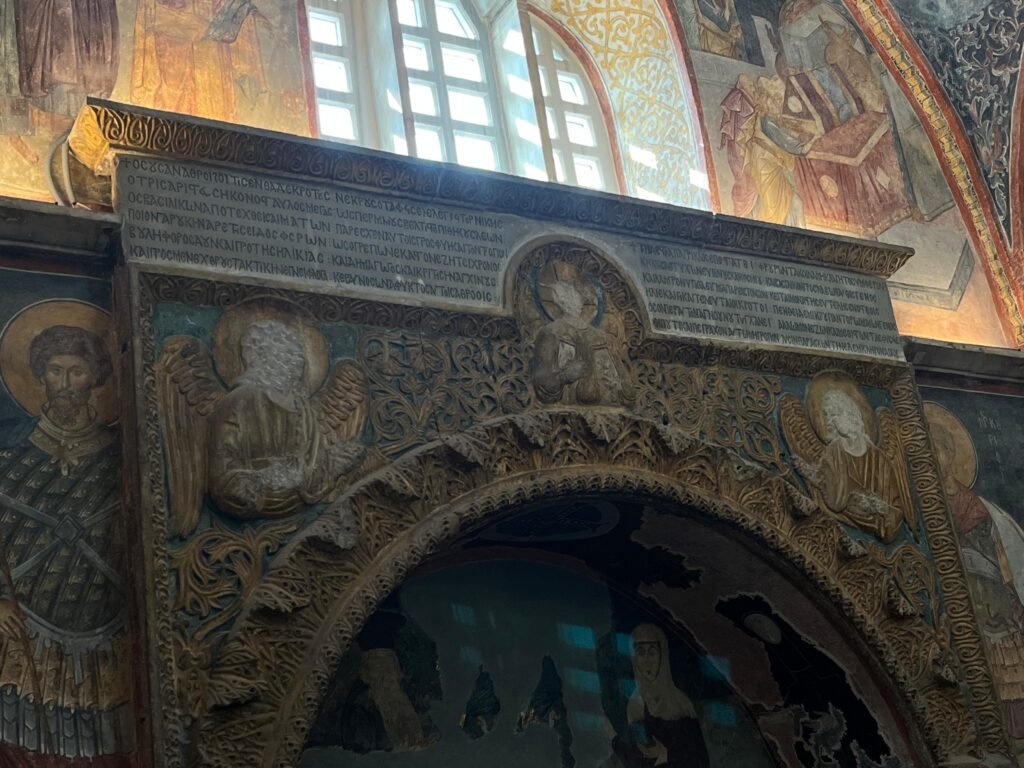
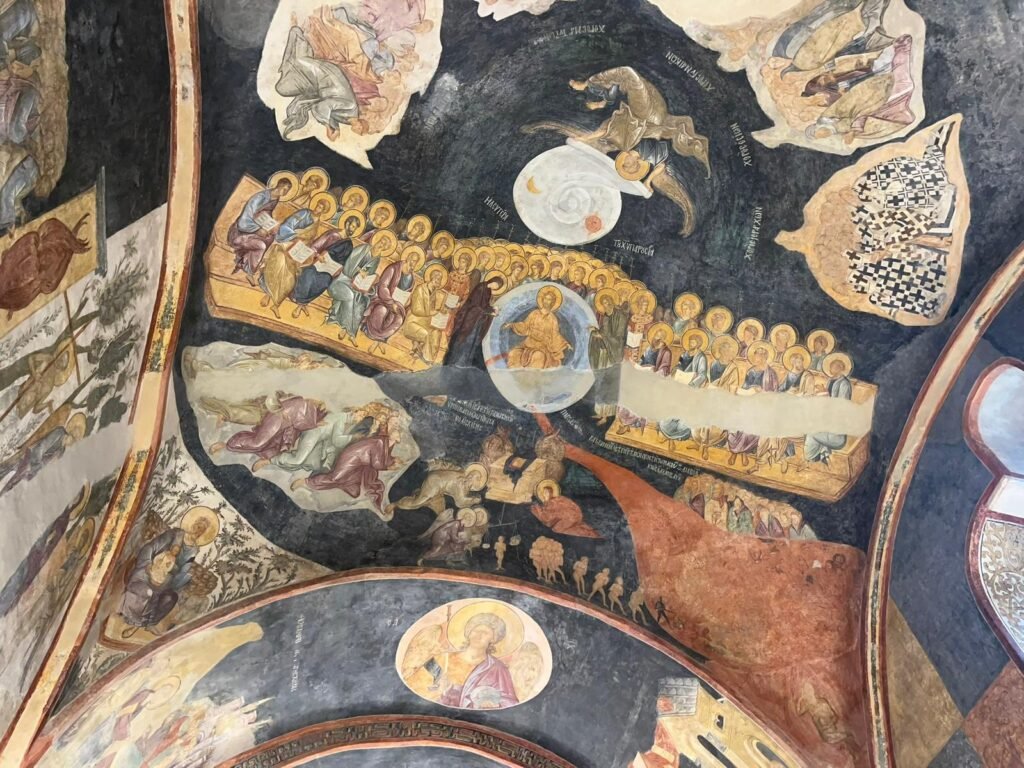
This side chapel contains dramatic frescoes, including the powerful Anastasis (Resurrection) scene. It was originally used as a burial space and focuses heavily on themes of salvation and eternal life.
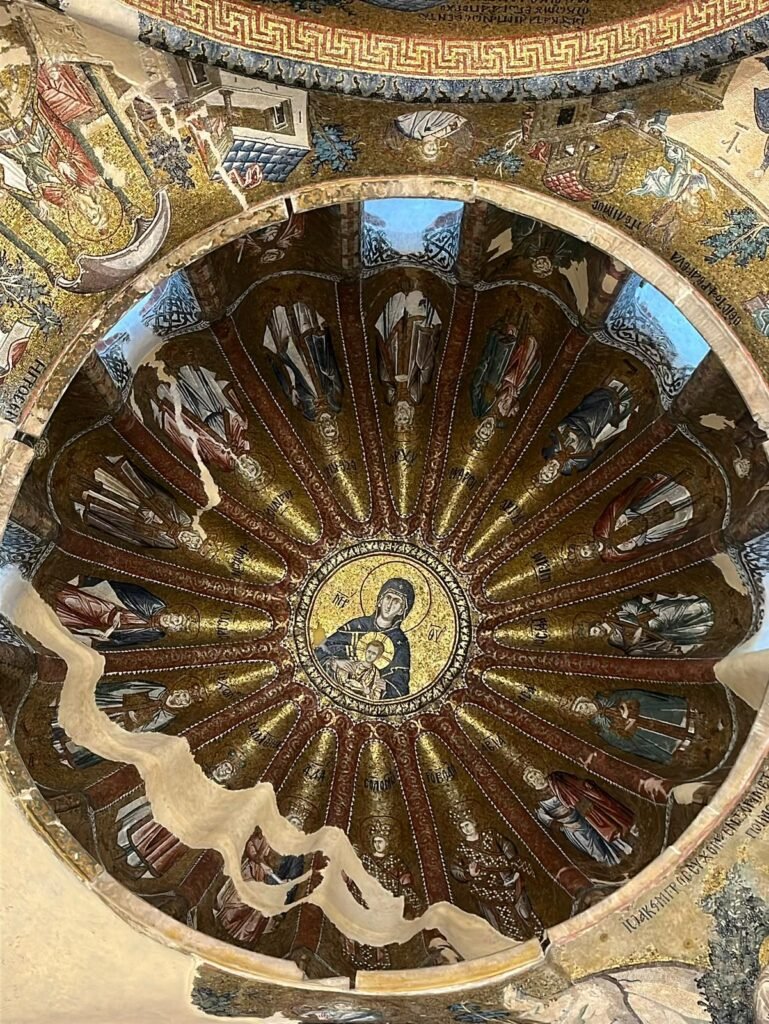
The Mosaics: A Masterpiece of the Late Byzantine World
Chora’s mosaics belong to what scholars call the Palaiologan Renaissance, the final artistic flowering of the Byzantine Empire.
What makes them special?
- Expressive faces
- Dynamic movement
- Rich storytelling
- Theological depth
The gold backgrounds reflect divine light, while the figures feel surprisingly human and emotional.
These mosaics are considered some of the finest surviving examples of late Byzantine art anywhere in the world.
Theodore Metochites: The Visionary Patron
One cannot understand Chora without knowing Theodore Metochites.
He was:
- A statesman
- A philosopher
- A scholar of astronomy
- The Grand Logothete (chief minister) of the Byzantine Empire
In the early 14th century, he financed and supervised the complete artistic renovation of Chora.
In one of the mosaics, he is shown offering a model of the church to Christ — wearing an elaborate ceremonial hat. This image symbolizes both humility and prestige.
Later in life, Metochites lost political power and was exiled. He eventually returned as a monk and spent his final years at Chora. His life reflects both the brilliance and instability of the late Byzantine world.
From Church to Mosque
After the Ottoman conquest of Constantinople in 1453 under Mehmed II, many churches were gradually converted into mosques.
In 1511, Chora was officially converted into a mosque. A minaret and mihrab were added, and the Christian images were covered with plaster.
Importantly, they were not destroyed — they were protected beneath layers of plaster for centuries.
In 1945, the building became a museum.
In 2020, it was reconverted into a mosque and reopened for worship in 2024, while still welcoming visitors outside prayer hours.
The American Restoration: Rediscovering the Art
One of the most important modern chapters in Chora’s history began in the mid-20th century.
After it became a museum, restoration work was carried out by the Byzantine Institute of America, led by Thomas Whittemore.
Between 1948 and 1958, conservators:
- Removed Ottoman plaster carefully
- Stabilized damaged mosaics
- Cleaned and preserved frescoes
- Documented the entire artistic program
Without this work, Chora’s mosaics might still be hidden today. The restoration placed Chora on the global map as one of the greatest surviving monuments of Byzantine art.
Why Chora Mosque Matters Today
Chora is part of the UNESCO-listed Historic Areas of Istanbul under UNESCO.
It matters because it represents:
- The intellectual depth of late Byzantium
- The transformation of Constantinople into Ottoman Istanbul
- The layered identity of the city
- International cooperation in art conservation
Few monuments tell such a complete story of continuity and change.
Get in Touch With Us
Planning to visit Kariye Mosque and want a deeper understanding of its mosaics, theology, and layered history?
We offer private and small-group tours designed to go beyond the surface — connecting Byzantine art, Ottoman transformation, and modern restoration into one clear and engaging narrative.
Whether you are:
- A history enthusiast
- An art lover
- An academic traveler
- Or simply curious about Istanbul’s hidden masterpieces
We would be happy to guide you through Chora and its surrounding historic neighborhood near the Theodosian Walls.
Tagged with :