


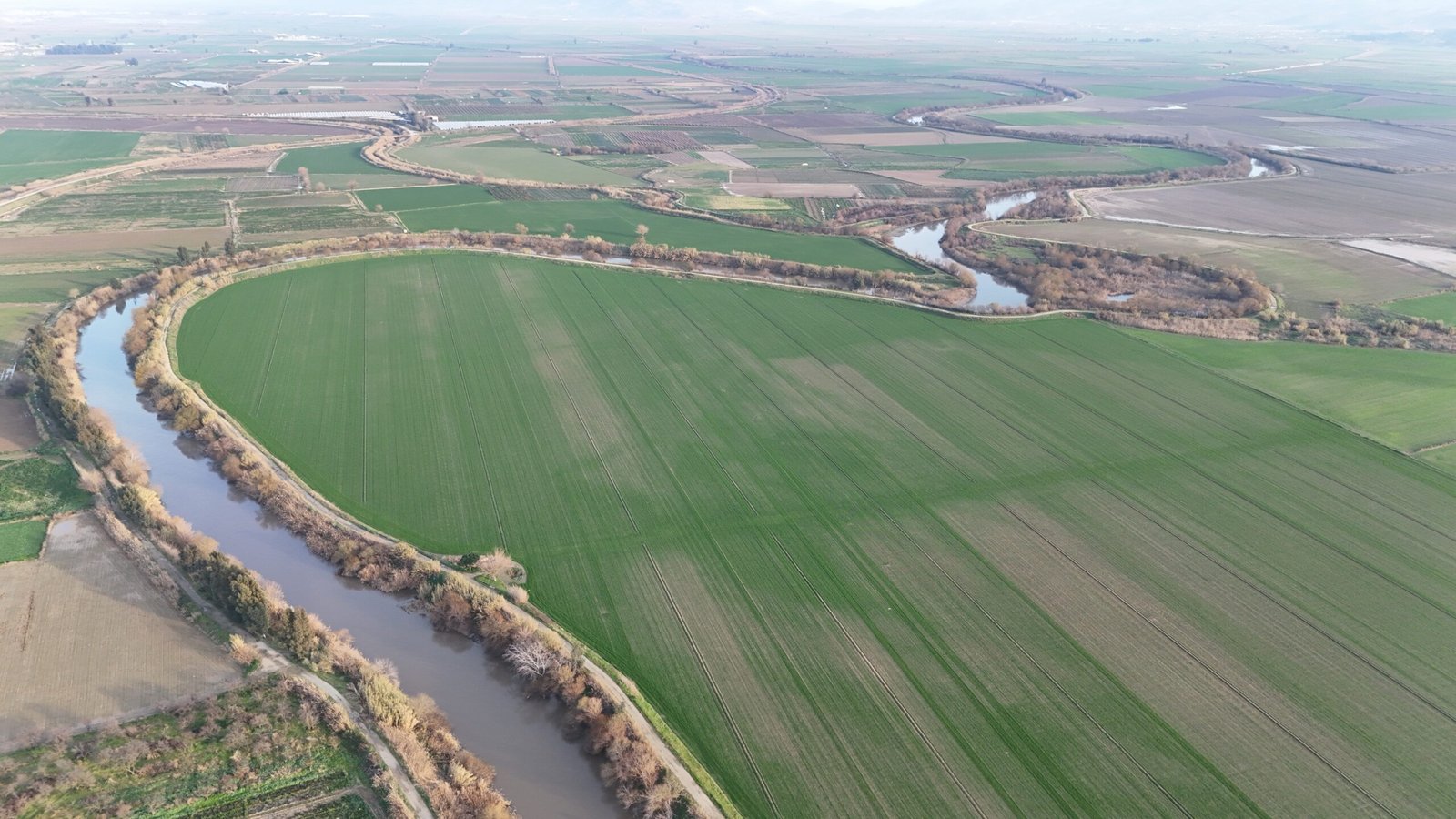
In the world of aesthetics, few forms are as hauntingly perfect as the Meander. For the architect, it is the “Greek Key”; for the mathematician, it is a fractal; but for the historian, it is the lifeblood of Western Civilization.
To understand the Büyük Menderes River is to understand how the very earth beneath our feet in Türkiye rose to swallow the sea, silencing ancient harbors and inspiring a design that has adorned everything from the robes of Roman Emperors to the digital interfaces of the 21st century.
The Geometry of Infinity: The “Greek Key” and the River’s Shadow
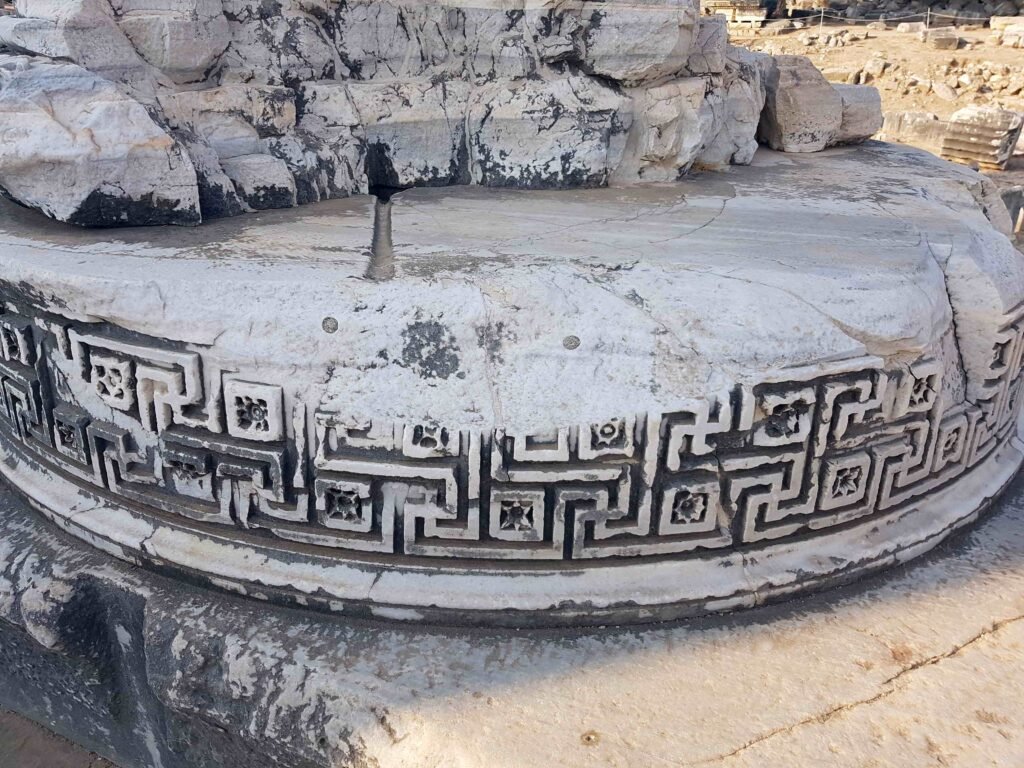
The term “meander” isn’t just a description of a winding path; it is an eponymous tribute to this specific Turkish river. In antiquity, the loops of the Maiandros were so distinct that they became a codified artistic motif known as the Meander Pattern.
The Philosophical Weight of a Line
- The Symbol of Apeiron: For the Ionian philosophers—the world’s first scientists who lived on the banks of this river—the meander was a visual representation of Apeiron (the Infinite). Because the line is continuous and folds back upon itself without breaking, it symbolized the eternal flow of life, the cycles of nature, and the immortality of the soul.
- Architectural Mastery: If you visit the Didymaion (Temple of Apollo at Didyma), you will find the meander carved into the colossal column bases. It wasn’t just decoration; it was a territorial signature. It told the pilgrims: “You are in the land of the winding water.”
- The Labyrinth Connection: Mythologists argue that the meander is a “linear labyrinth.” When the Greeks depicted the Cretan Labyrinth on coins, they used the meander pattern to represent the complex, inescapable path of the Minotaur.
The River God and the “Legal” Current
In Hellenistic mythology, Maiandros was not a distant deity but a local force of nature. He was the son of Oceanus, but his personality was uniquely Anatolian—unpredictable and stubborn.
The Litigious River: The Roman geographer Strabo records a fascinating historical quirk: The Menderes was perhaps the only river in history to be sued in court. Because its meanders frequently shifted, eroding one farmer’s field and “giving” it to another, the river was legally charged with “theft.” The fines were paid using the tolls collected from the ferries that crossed its waters.
The Great Silting: A Geopolitical Transformation
The Menderes is a river that “builds.” Over millennia, it carried the eroded heart of the Anatolian plateau down to the Aegean. This process didn’t just change the scenery; it collapsed empires.
The Death of the Ionian League
In 500 BCE, the Gulf of Latmos was a deep-water bay teeming with warships. Today, it is a cotton field.
- Miletus: Once a “Metropolis of 90 Colonies,” Miletus was a coastal peninsula. The Menderes slowly surrounded it with silt, turning the city into a landlocked island of ruins.
- Priene: This “Pompeii of Anatolia” was built on a cliff overlooking the sea. Today, standing in its theater, youlook out over 15 kilometers of land where there used to be blue water.
- The Mosquito Empire: As the salt water was replaced by stagnant river water, malaria became the “silent conqueror,” forcing the abandonment of ancient cities like Myus.
Lake Bafa: The Sea That Got Left Behind
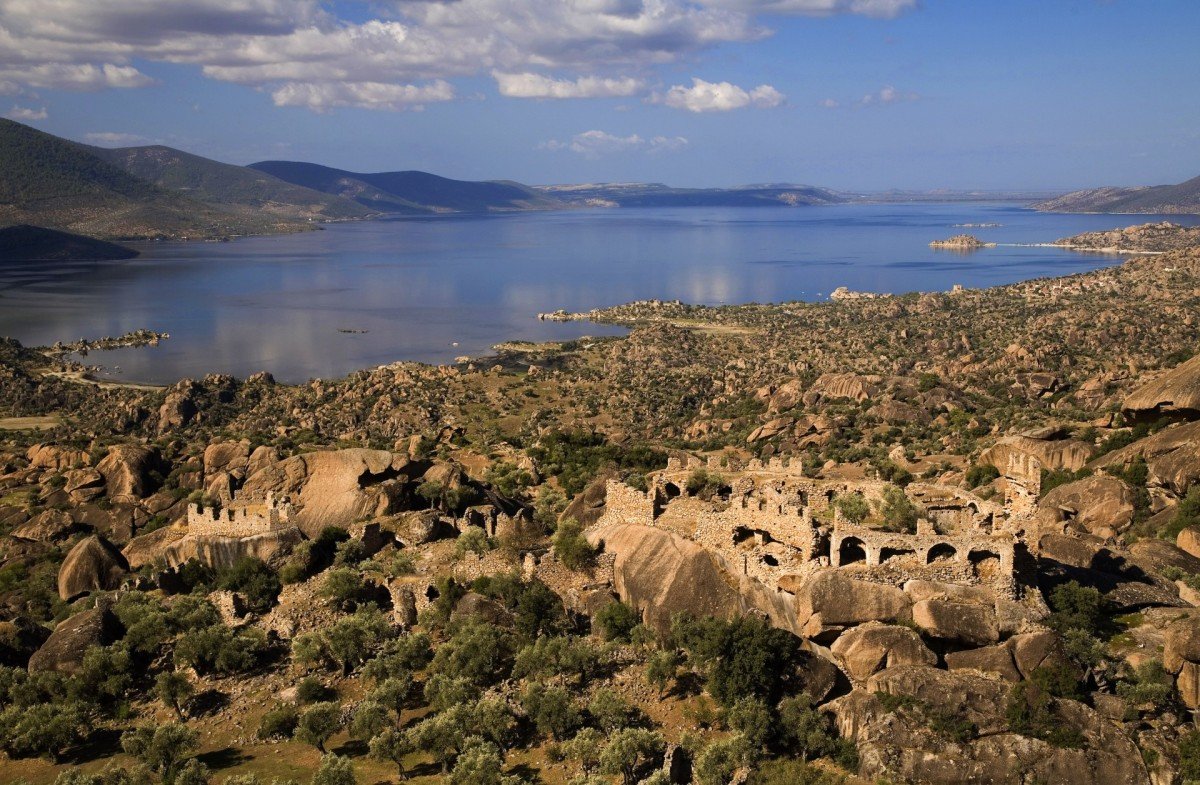
If you want to see the ghost of the ancient Aegean, you must visit Lake Bafa. Two thousand years ago, this was the Latmian Gulf. As the Menderes pushed its delta forward, it created a natural dam, trapping a piece of the sea inland.
The Mysticism of Latmos
The mountains rising from Lake Bafa—the Beşparmak (Latmos) Mountains—are made of prehistoric Gneiss rock that looks like it belongs on another planet.
- Endymion’s Sleep: This is where the moon goddess Selene was said to visit her mortal lover every night.
- Byzantine Hermits: In the Middle Ages, the lake’s islands (once naval outposts) became monasteries. Even today, you can find Yediler Monastery, where frescoes of Christ are painted directly onto the jagged cave walls, overlooking the brackish “trapped sea.”
The “Gate to Türkiye” Perspective: Why This Matters Today
For the modern traveler, the Menderes Valley is the ultimate “slow travel” destination. It is where the Cotton Road meets the Silk Road.
What to Look for as an “Insider”:
- The Fig Economy: The silt of the Menderes creates the world’s best soil for Sarılop figs. When you eat a dried fig in Aydın, you are tasting the mineral wealth of the river’s 600km journey.
- The Delta National Park: At the river’s end (the Dilek Peninsula), you can witness the “Serpentine Delta.” It is one of the few places in Europe where the sea, the forest, and the river meet in a pristine, undeveloped state.
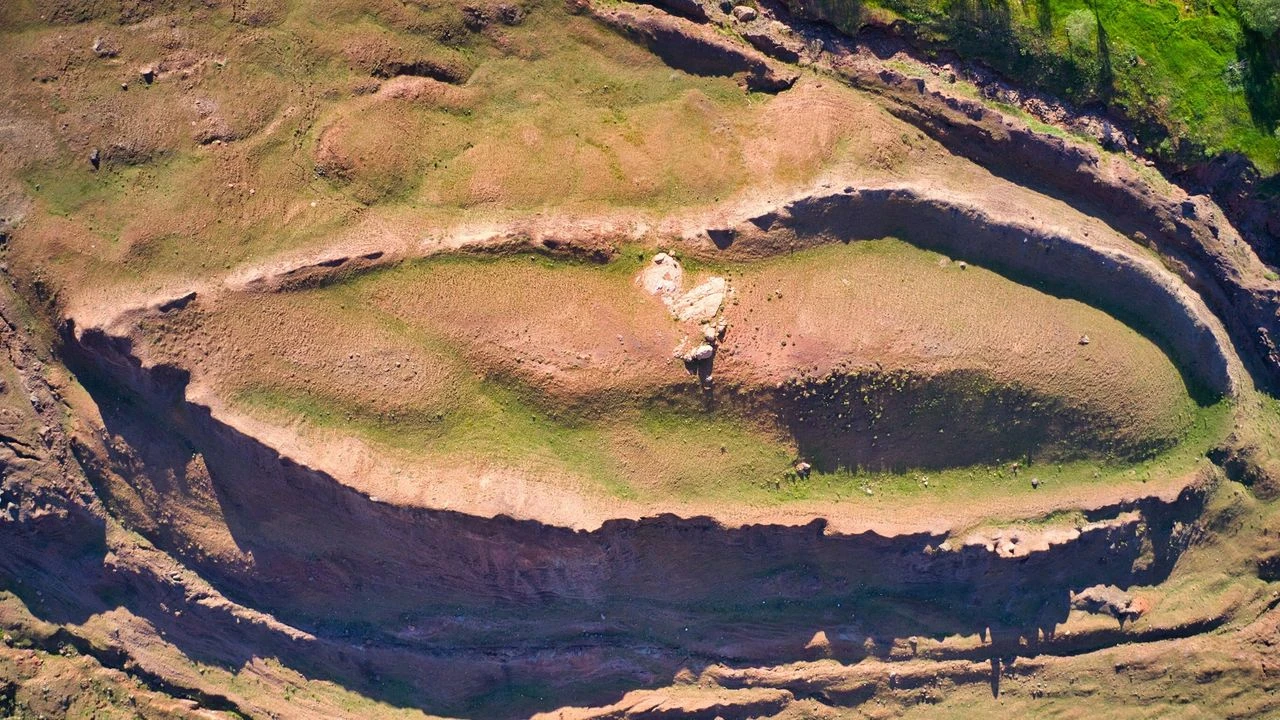
- The Invisible Cities: Between the major ruins, there are hundreds of “tels” or mounds—unexcavated layers of history waiting for the next generation of archaeologists.
Tagged with :