


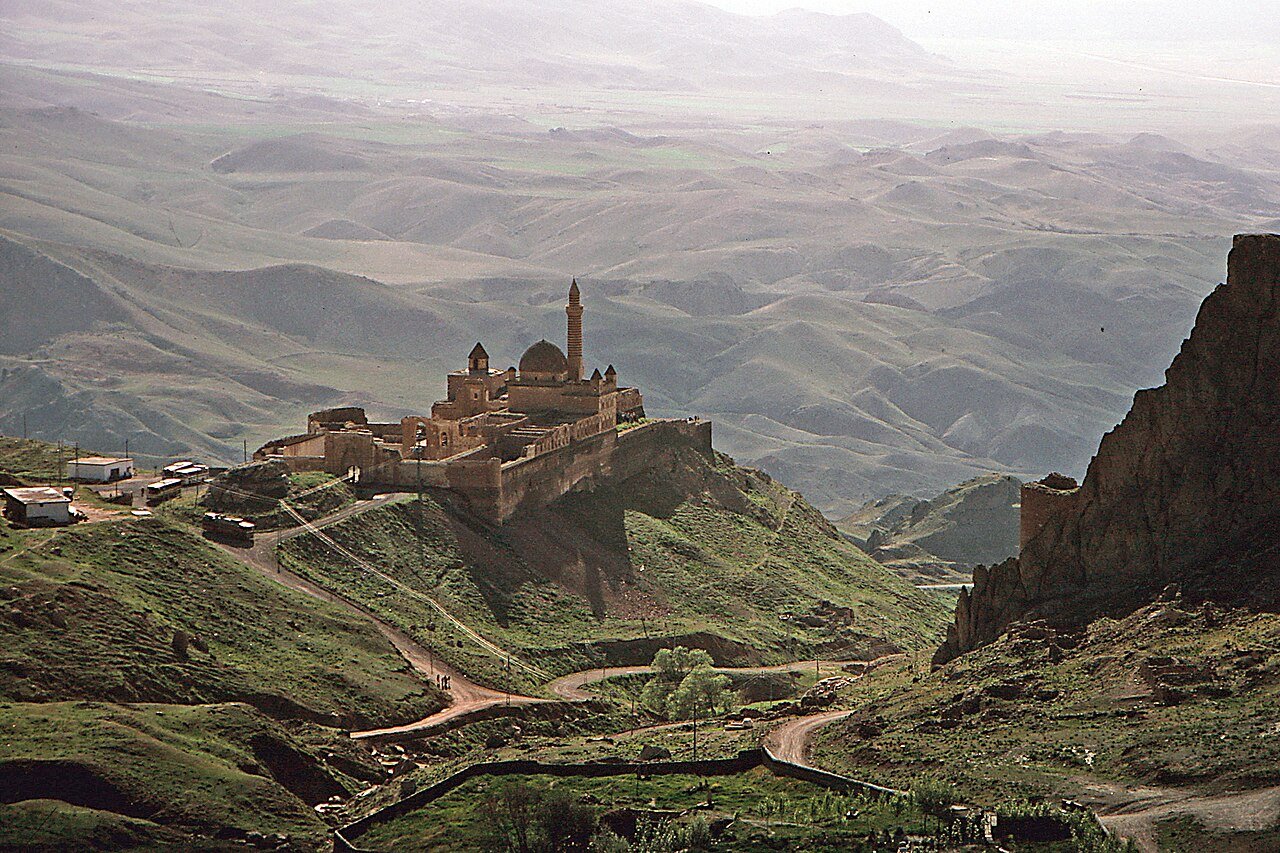
There are monuments you visit — and there are monuments that confront you.
The moment you approach the İshak Paşa Sarayı, rising above the plains of Doğubayazıt, you immediately understand: this was never meant to be a quiet provincial residence. This was architecture as authority. Built between 1685 and 1784 in what is today Ağrı Province, eastern Türkiye, the palace stands in one of the most strategic geographies of early modern Eurasia — where Anatolia meets Persia and the Caucasus. Caravans passed below it. Armies crossed these lands. Trade, diplomacy, and warfare shaped this frontier.
And above all of it, this palace watched.
Not Just a Palace — A Frontier Complex
Calling it a “palace” is almost misleading.
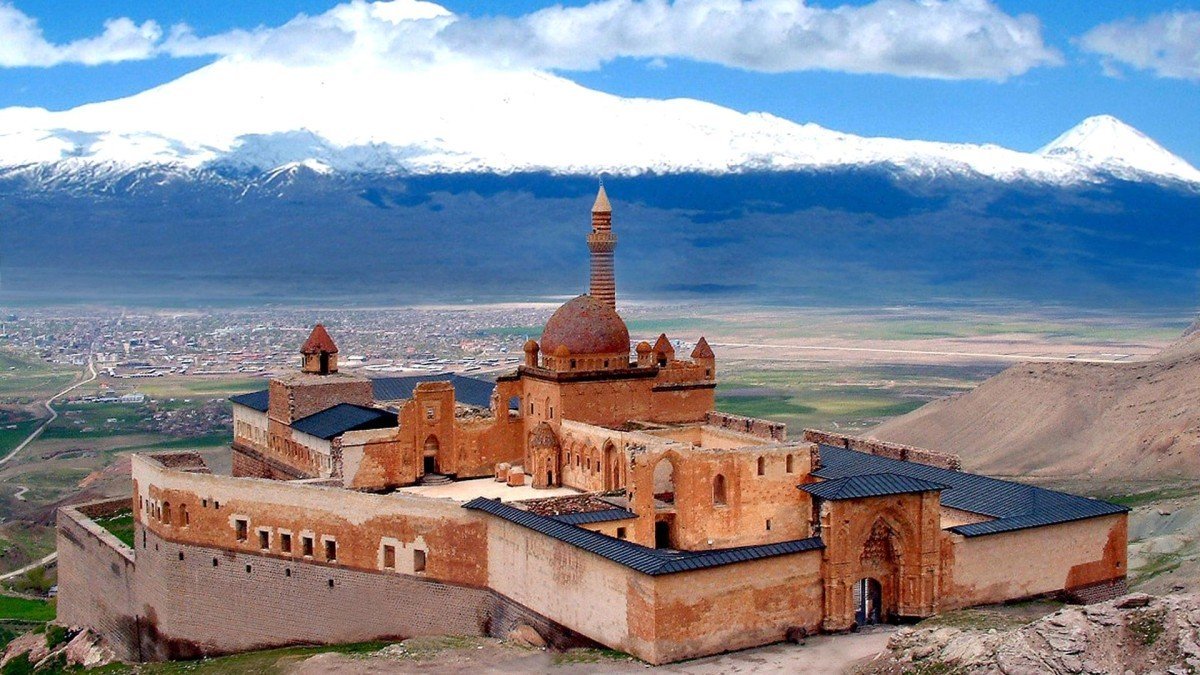
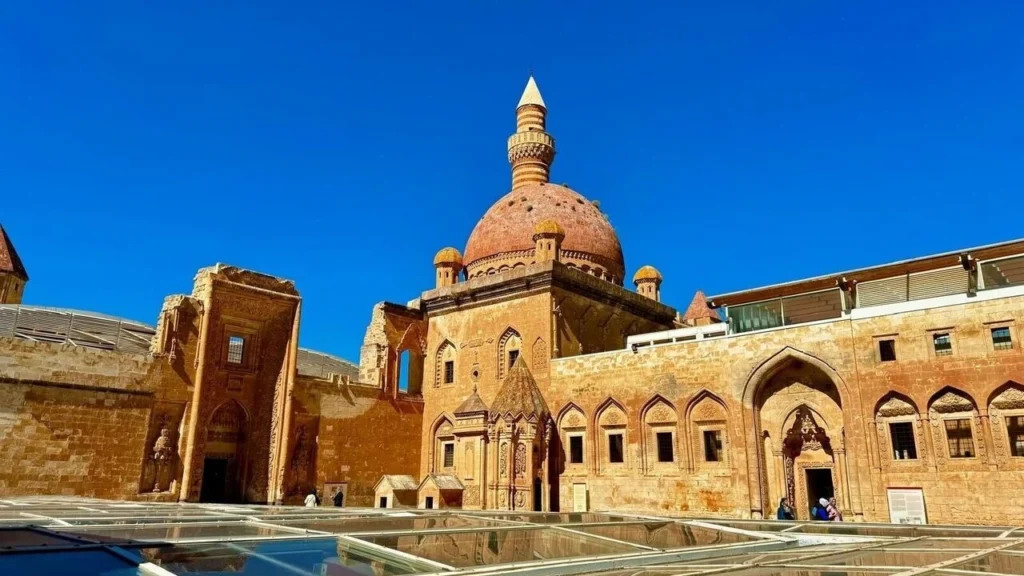
İshak Paşa Palace is a monumental administrative complex — closer to a fortified külliye than a European royal residence. Spread across roughly 7,600 square meters, it is organized around two major courtyards and contains:
- Reception halls (Selamlık)
- Private residential quarters (Harem)
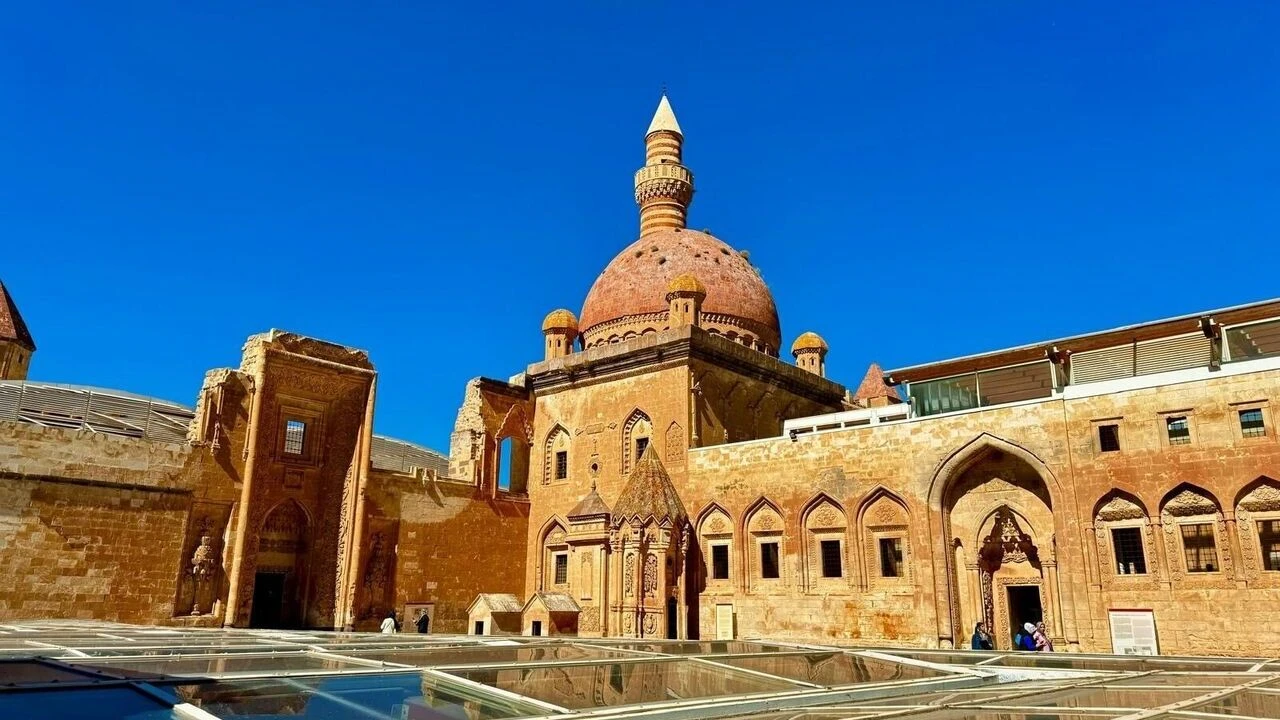
- A mosque with a domed sanctuary
- A mausoleum
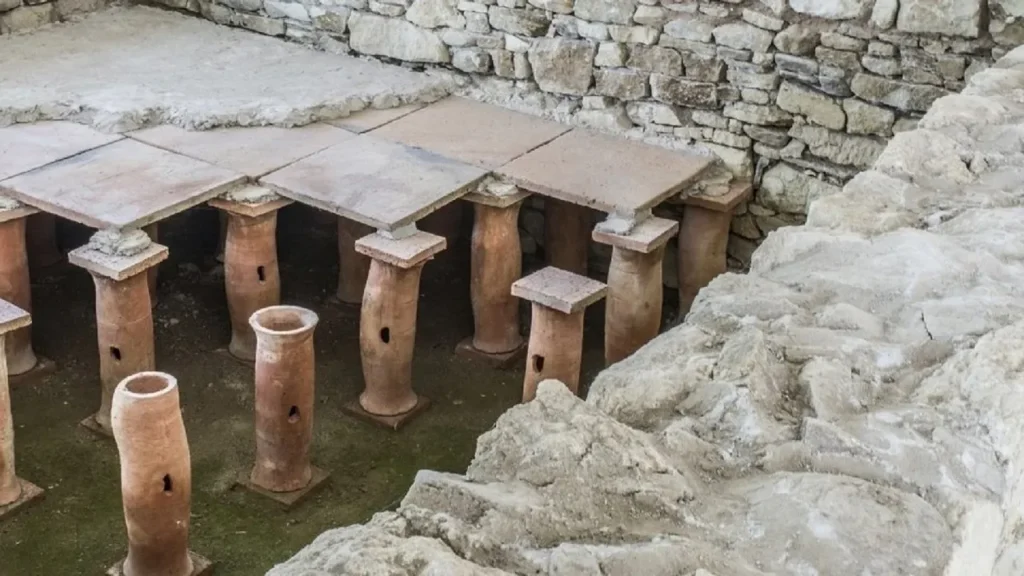
- A hammam with heating infrastructure
- Kitchens and storage facilities
- Military barracks
- Dungeons
- Service quarters
The deeper you move into the structure, the more controlled and private the space becomes. It follows classical Ottoman spatial hierarchy — but on a scale rarely seen outside the imperial capital.
Why Here?
To understand the palace, you must understand geography.
In the 17th and 18th centuries, this region was not remote — it was strategic. The routes linking Anatolia, Persia, and the Caucasus ran directly through this corridor. Whoever controlled Doğubayazıt controlled taxation, caravan trade, and military logistics.
The palace’s elevated position was both defensive and symbolic.
It dominates the landscape deliberately.
This was a statement: authority exists here.
Architectural Synthesis: Where Civilizations Meet
What makes İshak Paşa Palace architecturally unique is not just its size — it is its hybridity.
This is frontier architecture absorbing multiple traditions.
Seljuk Heritage
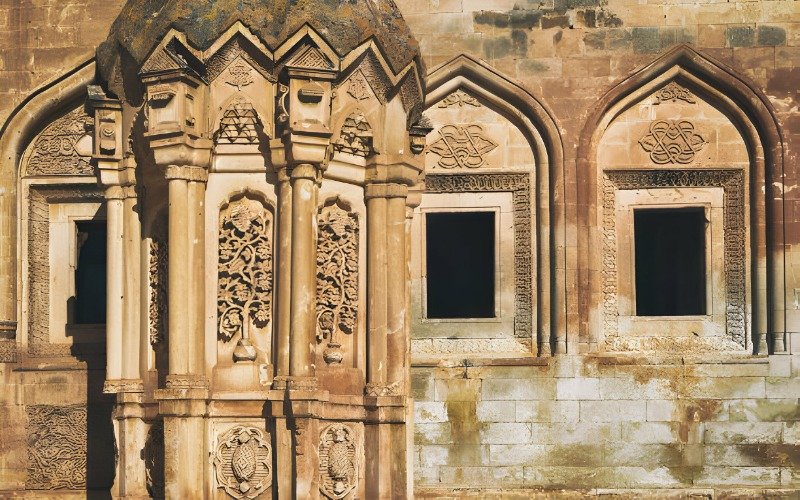
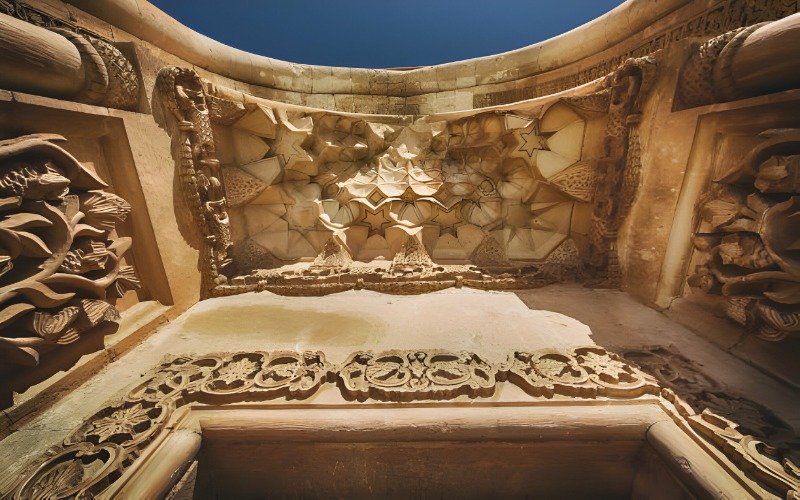
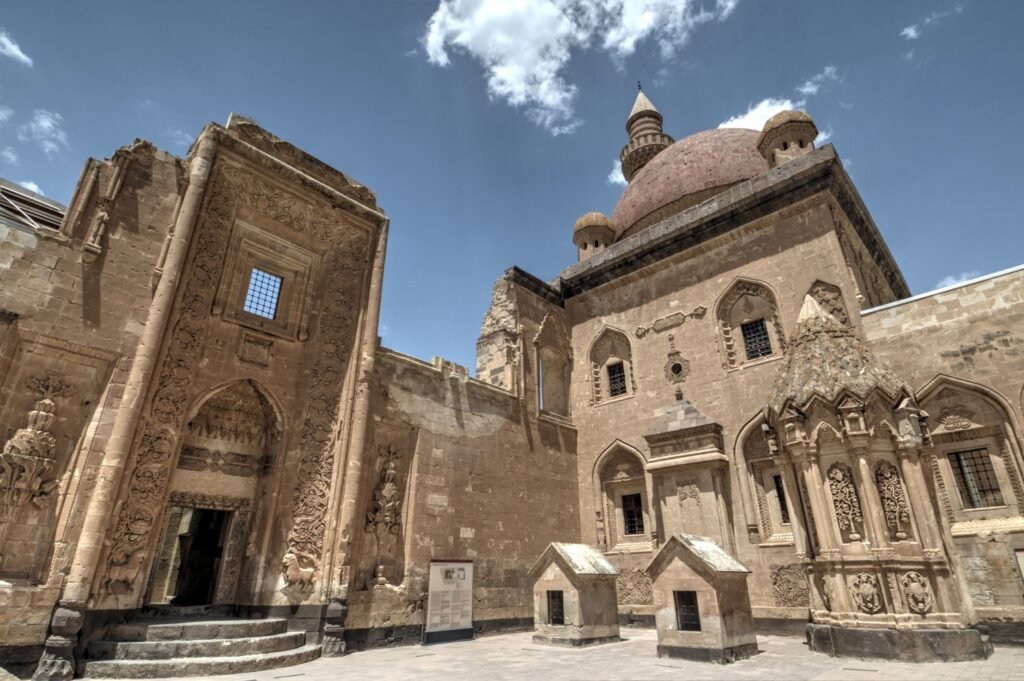
The monumental stone portal (taç kapı) recalls medieval Anatolian Seljuk craftsmanship. Deep geometric carvings and sculptural detail frame the entrance with almost cathedral-like intensity.
Ottoman Planning
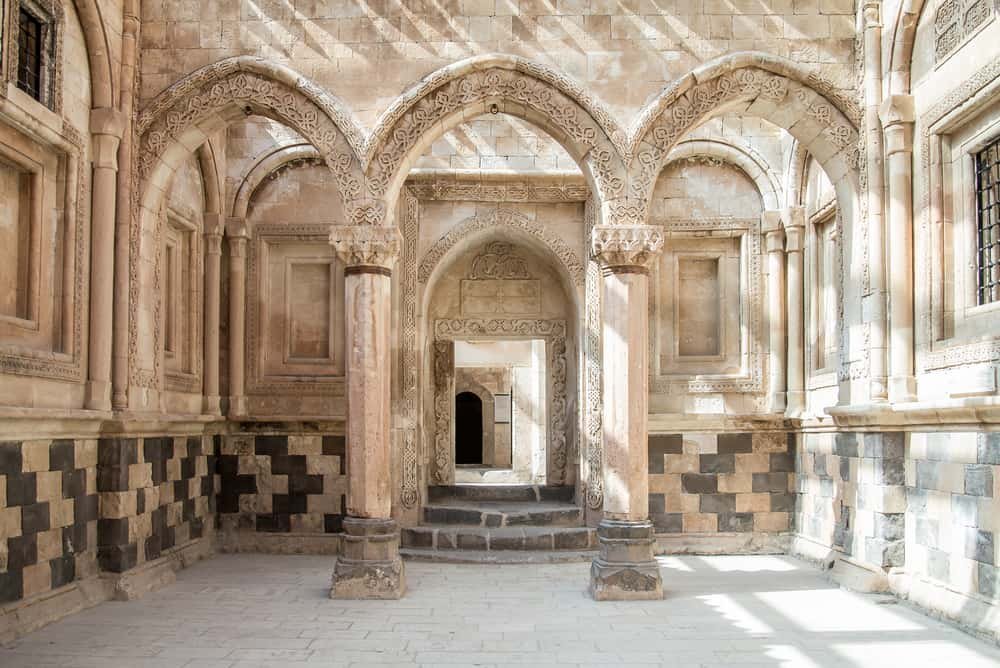
The courtyard organization, mosque placement, and administrative sequencing follow Ottoman classical logic.
Persian Influence
Floral motifs and façade articulation reflect eastern decorative traditions — unsurprising given the proximity to Persian cultural zones.
Subtle Baroque Touches
By the late 18th century, Western Baroque influence had filtered into Ottoman elite aesthetics. You can sense that transition here.
This palace is not stylistically pure.
It is a cultural crossroads carved in stone.
Engineering in a Harsh Climate
Eastern Anatolia is not forgiving.
Winters are long, cold, and severe. Yet the palace reveals sophisticated adaptation:
- Thick insulating stone walls
- Distributed fireplaces throughout rooms
- Water drainage and channel systems
- Heated bath infrastructure resembling hypocaust principles
The frequently repeated claim that the palace had a “modern central heating system” is exaggerated — but the environmental engineering for its time was advanced and carefully integrated.
This was not decorative construction.
It was calculated infrastructure.
Power, Politics, and Provincial Authority
The palace was completed under İshak Paşa, an 18th-century Ottoman governor of the region. While his biography matters, the real story is what the building represents.
In the 18th century, frontier governors often exercised semi-autonomous authority. Monumental architecture in the provinces was never politically neutral. Constructing a complex of this magnitude was:
- A projection of dominance over local tribes
- A declaration of administrative capability
- A symbol of loyalty — but also of strength
Some historians interpret the palace as an architectural assertion of regional power at a time when the Ottoman center was navigating decentralization.
Whether intended as quiet ambition or strategic necessity, the scale of the project was extraordinary for its geography.
Labor and Ethical Questions
Construction spanned nearly a century.
Such a prolonged and ambitious project required:
- Significant regional taxation
- Skilled artisans from various ethnic and cultural backgrounds
- Logistical coordination in a frontier environment
There is no concrete archival evidence proving systematic forced labor. However, 17th–18th century provincial governance relied on hierarchical economic extraction systems. The palace reflects concentrated wealth and authority — realities that cannot be separated from the social structures of the time.
Monuments are never innocent.
They are products of power.
Decline and Rediscovery
By the 19th century, shifting political dynamics and regional conflicts reduced the palace’s importance. Earthquakes and wars caused damage. Eventually, it was abandoned.
During Russo-Ottoman conflicts, sections were reportedly looted or deteriorated further.
In the modern era, restoration efforts have preserved the structure, though not without debate. Conservation specialists have discussed the balance between protecting the monument and maintaining historical authenticity — especially regarding roof additions in recent decades.
Today, the palace stands on UNESCO’s Tentative World Heritage List.
Why İshak Paşa Palace Matters Today
The İshak Paşa Sarayı is one of the most extraordinary architectural monuments in eastern Türkiye — not because it imitates Istanbul, but because it does not.
It represents:
- Ottoman frontier governance
- Cultural synthesis between Anatolia and Persia
- Provincial authority expressed through monumental architecture
- The geopolitics of an empire at its edge
Standing there, overlooking the plains, you do not just see a palace.
You see a borderland narrative — written in stone.
Tagged with :