


Cities usually have one name, sometimes two. Istanbul has had dozens — and behind each one lies a shift in power, culture, and worldview. Its names are not just historical labels; they are mirrors of how different civilizations understood the city and what they wanted it to represent.
To trace the names of Istanbul is to trace the history of empires, languages, religions, and everyday life itself.
Names Before History: Memory, Geography, and Silence
The earliest known name associated with the site of Istanbul is Lygos, mentioned by Roman writers such as Pliny the Elder. This name likely belonged to a Thracian settlement that existed before Greek colonization.
What makes Lygos important is not how much we know about it — but how little. Its obscurity reminds us that cities often exist long before history starts recording them. In this sense, Lygos represents the pre-written memory of Istanbul: a place shaped by geography long before it was shaped by empire.
Even then, the Bosphorus mattered. Control of water routes would later define every name the city carried.
Byzantion: Naming as an Act of Foundation
When Greek settlers from Megara founded Byzantion around 667 BC, the act of naming was an act of ownership. Naming the city after Byzas, whether a real leader or a mythic figure, followed a Greek tradition: cities were often tied to founders, heroes, or divine ancestry.
Byzantion was more than a name — it marked the city as Greek, culturally and politically. Coins, inscriptions, and treaties all used this name, embedding it into the ancient Mediterranean world.
Here, naming meant belonging.
Roman Power and the Politics of Renaming
Under Roman rule, names became tools of imperial messaging. The brief name Augusta Antonina, given by Emperor Septimius Severus, was not meant for locals — it was meant for Rome.
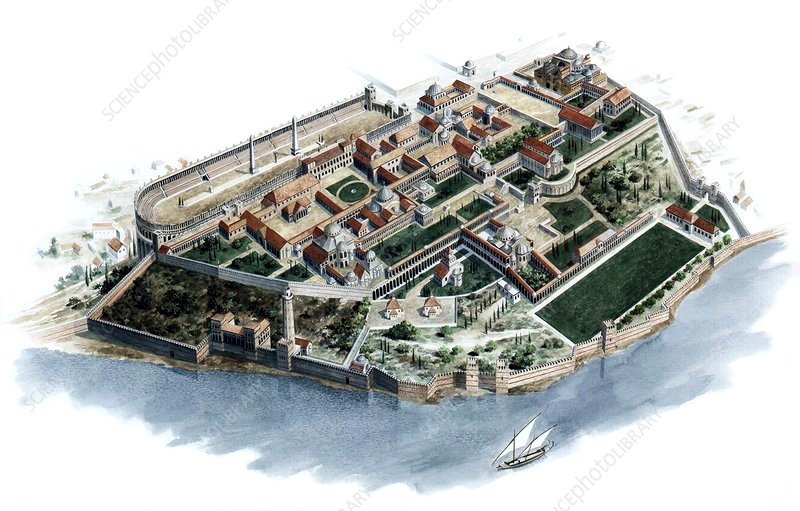
Later, when Constantine chose the city as his capital in 330 AD, he attempted something unprecedented: to rebrand the empire itself. Declaring the city Nova Roma (New Rome) was a symbolic act, suggesting continuity rather than rupture.
Yet the failure of “New Rome” as a popular name is telling. People do not always accept the names imposed by power. Instead, Constantinople — “the City of Constantine” — survived because it blended imperial authority with personal legacy.
Constantinople and the Idea of “The City”
For over a thousand years, Constantinople was not just a capital; it was the capital.
In Greek, people often referred to it simply as ἡ Πόλις (the City). This is crucial. When a city becomes the city, it no longer needs a name — it becomes the reference point.
This everyday linguistic habit shaped the future. The phrase “eis tēn polin” (“to the city”) was used constantly by Greeks traveling there. Over centuries, this phrase would evolve phonetically into Istanbul.
This shows how spoken language, not official decrees, often determines history.
How Outsiders Named Istanbul
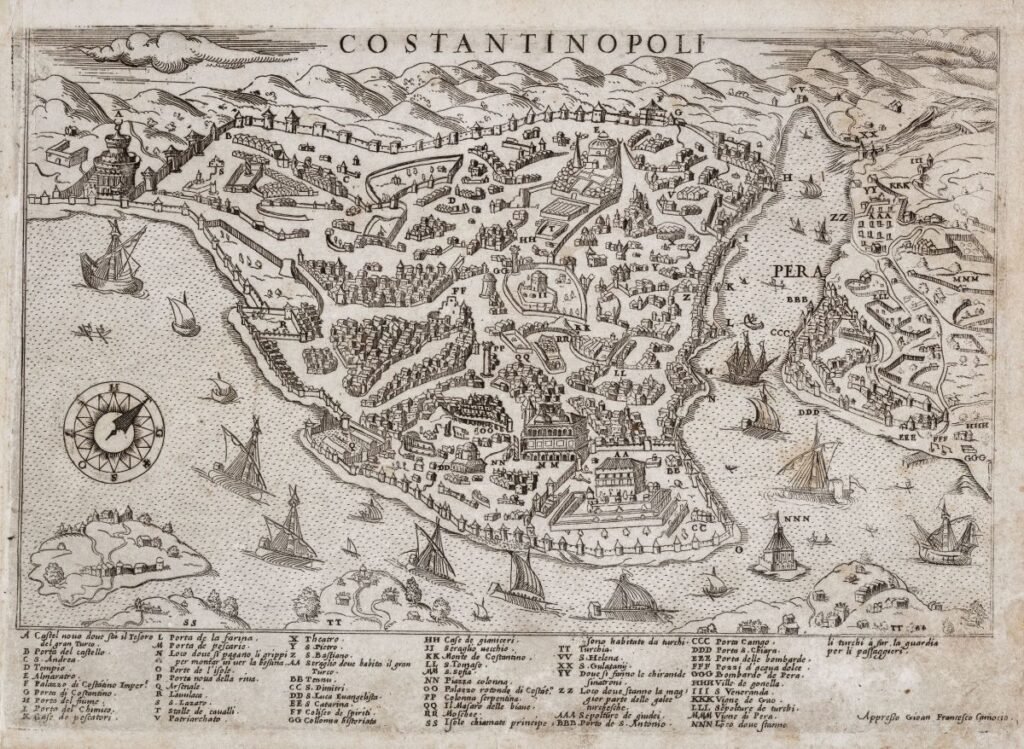
One of the most fascinating aspects of Istanbul’s naming history is how others named it.
- Tsargrad (“City of the Emperor”) reflects how Slavic peoples viewed the city primarily as a symbol of imperial authority.
- Miklagard (“Great City”) used by Vikings focuses not on politics, but on scale and wonder.
- Medieval European forms of Constantinople reveal how the city existed in imagination long before many Europeans ever saw it.
Each name answers a different question:
- Who owns the city?
- What makes it powerful?
- Why is it famous?

Ottoman Rule: Coexisting Names, Coexisting Worlds
After 1453, something unusual happened: the city kept multiple names at the same time.
- Kostantiniyye remained the official, administrative name.
- Istanbul dominated everyday speech.
- İslâmbol expressed religious symbolism.
- Titles like Payitaht, Dersaadet, and Asitane described political function and imperial ideology.
This coexistence reflects the Ottoman worldview: pragmatic, multilingual, and layered. Unlike modern nation-states, the empire did not require a single name to define identity.
Here, names were functional, not exclusive.
Istanbul and Modern Identity
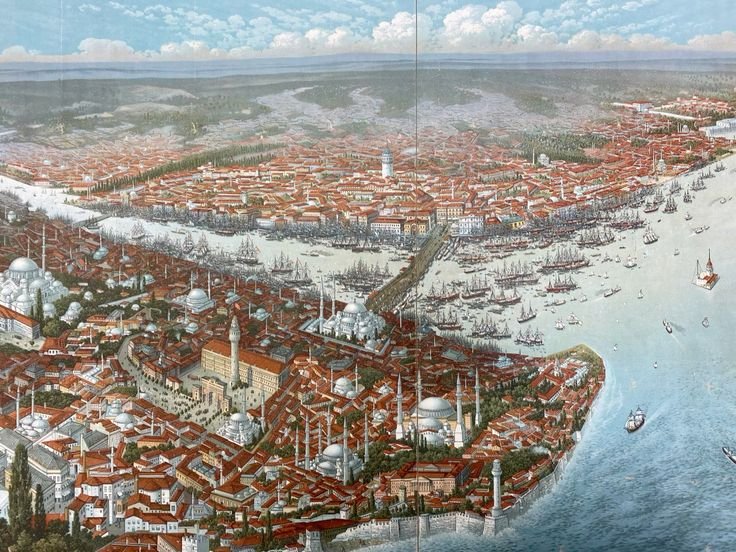
The 1930 decision to make Istanbul the official international name was not just linguistic — it was ideological. It aligned with the Turkish Republic’s emphasis on:
- spoken language over imperial legacy
- local usage over foreign tradition
- modern identity over medieval continuity
Interestingly, the chosen name was not invented. It had always existed — quietly, orally, organically.
This makes Istanbul rare: a modern city whose official name comes not from rulers, but from everyday speech.
Names as Identity, Not Just History
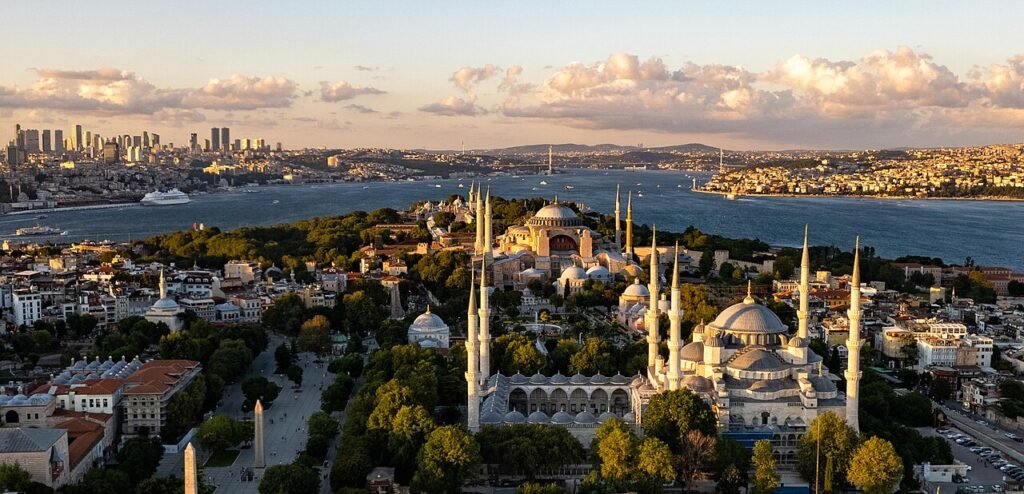
Istanbul’s many names show us something fundamental:
a city’s name is a reflection of how it is seen, claimed, and lived in.
- Empires used names to assert power.
- Locals used names to navigate daily life.
- Outsiders used names to express awe.
- Modern states used names to define identity.
In Istanbul, all of these layers remain visible.
A City That Refuses to Be Singular
From Lygos to Byzantion, from Constantinople to Istanbul, the city has never belonged to one language, one empire, or one story.
Its names do not replace one another — they accumulate.
That is why Istanbul is not just a city with many names.
It is a city that teaches us how names shape history — and how history, in return, reshapes names.
Tagged with :