


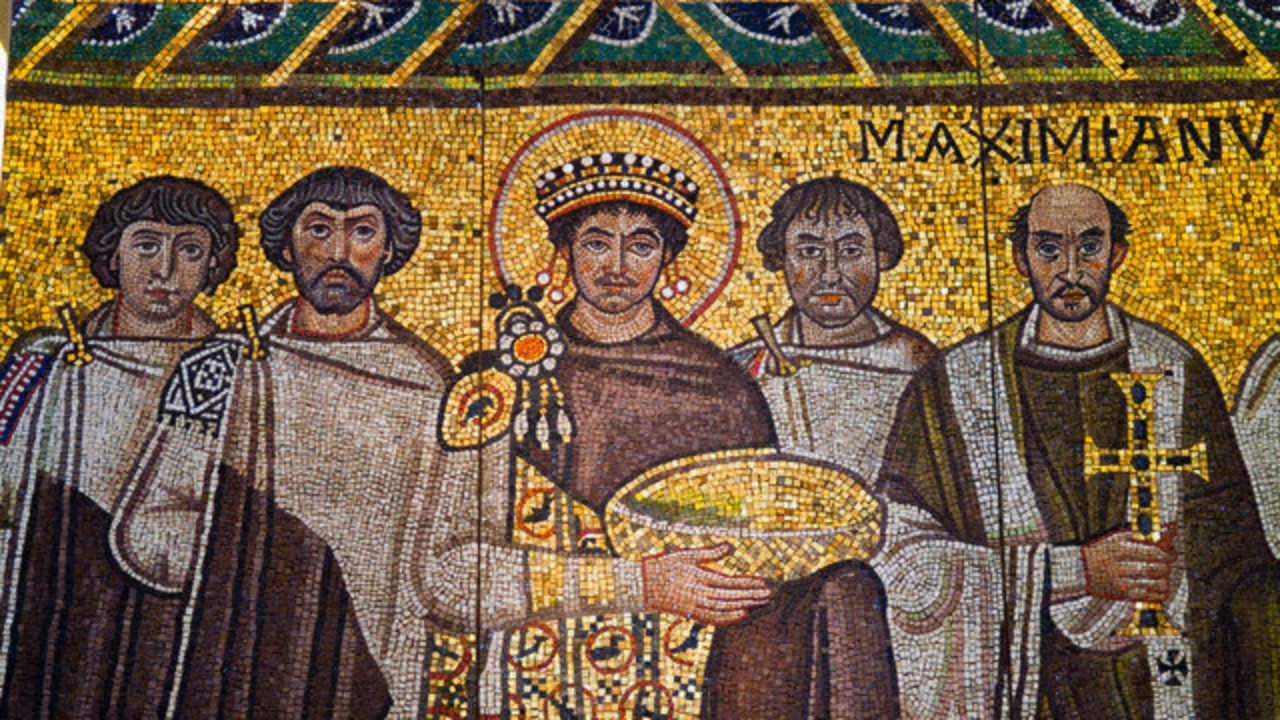
When people hear the term “Byzantine Empire,” they often imagine something separate from Rome — exotic, medieval, and distant from classical antiquity. Yet this assumption is historically misleading. What we call the Byzantine Empire was, in institutional, legal, and political terms, the continuation of the Roman Empire in the East. Its citizens called themselves Rhomaioi — Romans.
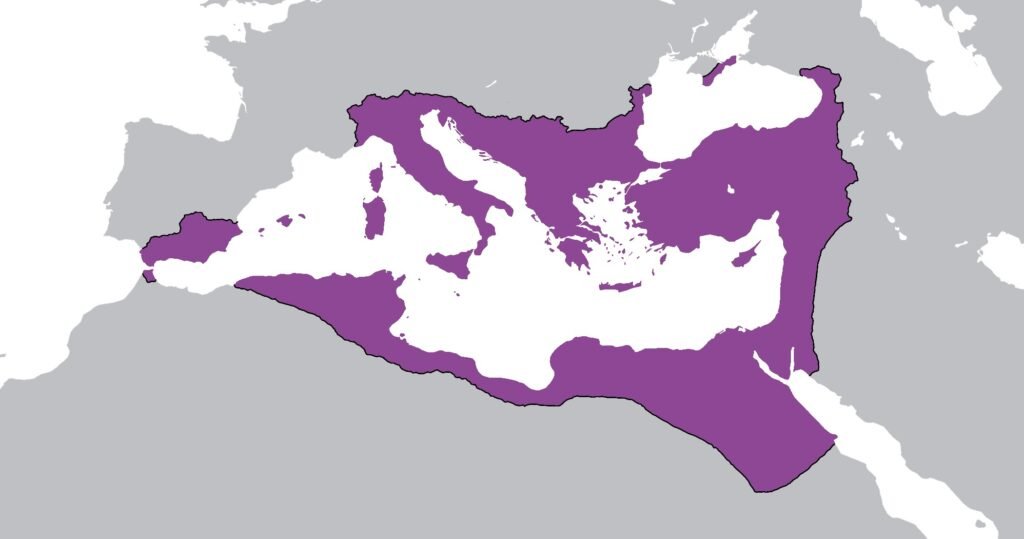
For more than eleven centuries, from 330 to 1453, this Eastern Roman state shaped the destiny of Europe, the Balkans, Anatolia, and the eastern Mediterranean. Centered on Constantinople, it preserved Roman law, refined imperial governance, defended Christianity, and acted as a geopolitical shield between continents.
This is the complete story — from foundation to fall.
The Foundation of the Eastern Roman Empire
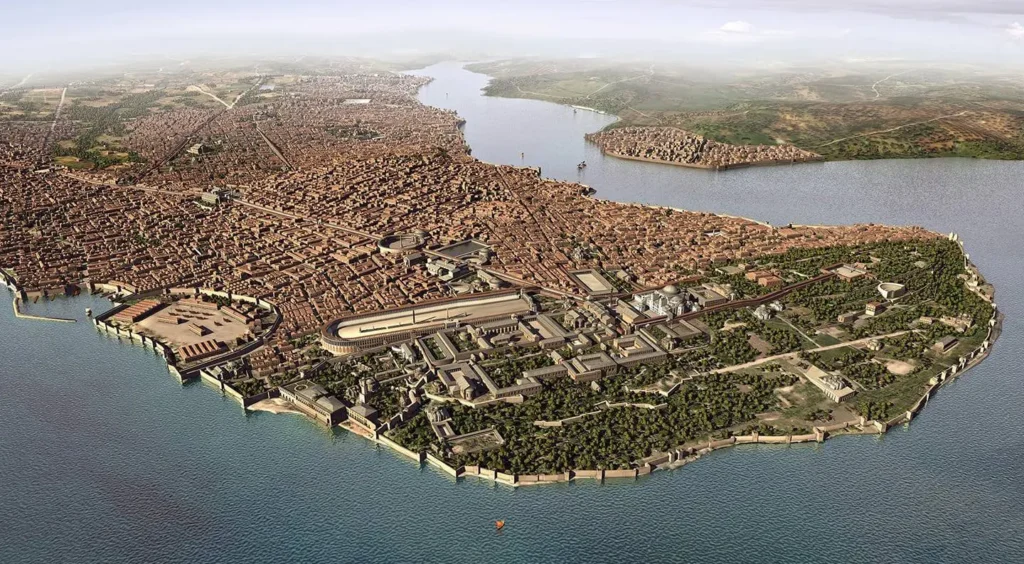
The origins of the Eastern Roman Empire lie in late Roman reforms. In 330 CE, Emperor Constantine the Great refounded the ancient Greek colony of Byzantium as Constantinople — Nova Roma, the “New Rome.”
The choice was strategic:
- It controlled the Bosporus Strait.
- It commanded trade between the Black Sea and the Mediterranean.
- It was naturally defensible.
- It stood closer to the empire’s wealthiest provinces: Egypt, Syria, and Anatolia.
Constantine also reshaped imperial ideology. Christianity, legalized earlier in his reign, became central to imperial identity. Constantinople was conceived not merely as a capital, but as a Christian imperial city — divinely sanctioned.
After the death of Theodosius I in 395, the empire was permanently divided between eastern and western courts. When the Western Roman Empire collapsed in 476, the eastern half survived — wealthier, more urbanized, and more administratively stable.
Rome did not fall. It shifted east.
Justinian I and the First Golden Age
The 6th century marked the first high point of Eastern Roman power under Justinian I (r. 527–565).
His reign represents the most ambitious attempt to restore Roman universality.
The Corpus Juris Civilis
Justinian’s legal codification systematized centuries of Roman law into a coherent body. This Corpus Juris Civilis preserved classical jurisprudence and later shaped civil law systems across Europe.
Without Justinian, Roman law might not have survived intact.
Reconquest of the West
Justinian’s generals reconquered:
- North Africa from the Vandals
- Italy from the Ostrogoths
- Parts of Spain
For a brief moment, the Mediterranean again resembled a Roman lake.
Monumental Architecture
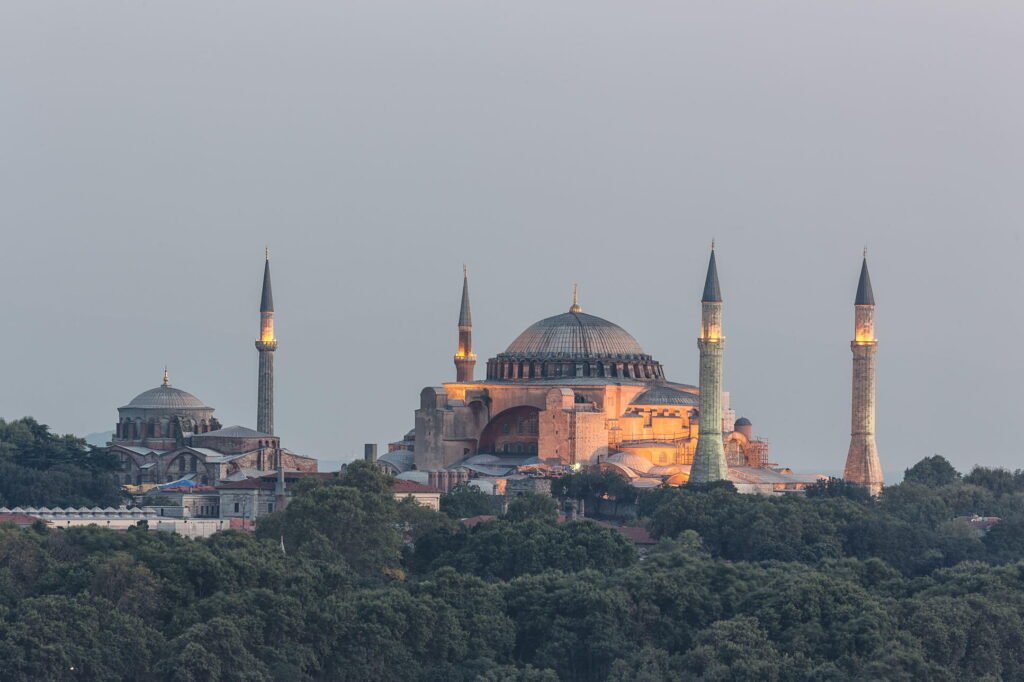
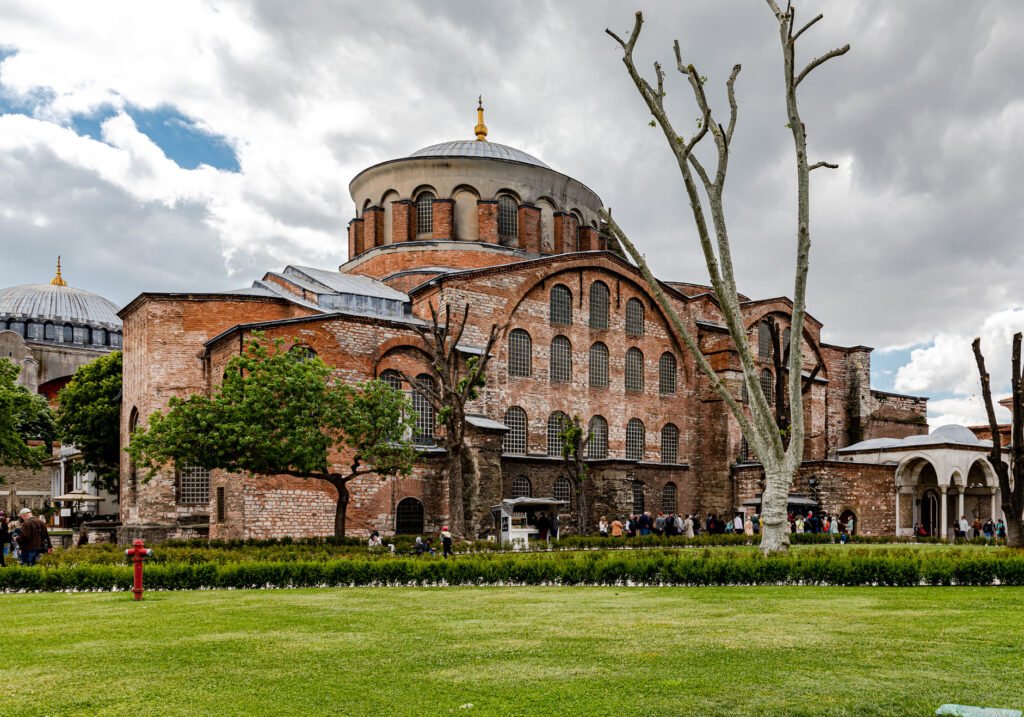
After the Nika Revolt devastated the capital, Justinian rebuilt Constantinople on a grand scale. The crowning achievement was Hagia Sophia, completed in 537 — an engineering marvel whose dome symbolized the union of heaven and empire.
Yet this golden age came at a cost: plague, military overextension, and financial strain.
Crisis and Transformation: 7th–8th Centuries
The 7th century nearly ended the empire.
Under Heraclius, the empire defeated the Persian Sasanian Empire — only to lose Syria, Egypt, and North Africa to rapidly expanding Islamic forces.
These were not minor losses. Egypt alone had been the empire’s grain basket.
In response, the empire reinvented itself:
- The theme system reorganized provinces into military districts.
- Anatolia became the defensive core.
- Naval innovation secured maritime survival.
Later, Leo III the Isaurian initiated Iconoclasm — banning religious images. The Iconoclast Controversy divided society for over a century, revealing the deep fusion of theology and politics in Byzantine life.
Despite these crises, the empire did not collapse. It adapted.
The Macedonian Renaissance and Imperial Peak
From the 9th to early 11th centuries, the empire entered a renewed period of strength under the Macedonian dynasty.
Basil I stabilized governance and law.
Basil II expanded imperial authority across the Balkans and subdued Bulgaria.
By 1025, the empire reached its medieval territorial height.
This era witnessed:
- Cultural revival in classical scholarship
- Missionary expansion among Slavic peoples
- Flourishing court ceremonial culture
- Administrative sophistication
Constantinople was Europe’s largest and wealthiest city — a commercial, diplomatic, and cultural hub unmatched in the region.
Social and Daily Life in the Byzantine Empire
The Eastern Roman Empire was not merely emperors and wars. It was a complex society.
Urban Life
Constantinople housed:
- Imperial bureaucrats
- Artisans organized in guilds
- International merchants
- Dockworkers
- Monks and clergy
- Aristocratic families
The imperial government regulated grain supply, trade standards, and pricing.
Rural Life
The majority of the population lived in villages across Anatolia, the Balkans, and Greece, farming wheat, olives, and grapes. Military land grants tied soldiers to agricultural production.
Social Hierarchy
Society included:
- The emperor and court aristocracy
- Military elites
- Civil administrators
- Urban middle classes
- Peasantry
Service to the state provided mobility. Talent could elevate families into the aristocracy.
Religion and Ritual
Orthodox Christianity permeated daily life across Constantinople, Greece, and the wider eastern Mediterranean. The emperor was seen as God’s representative — a sacred ruler governing a sacred order.
The Turning Point: Manzikert and Internal Weakness
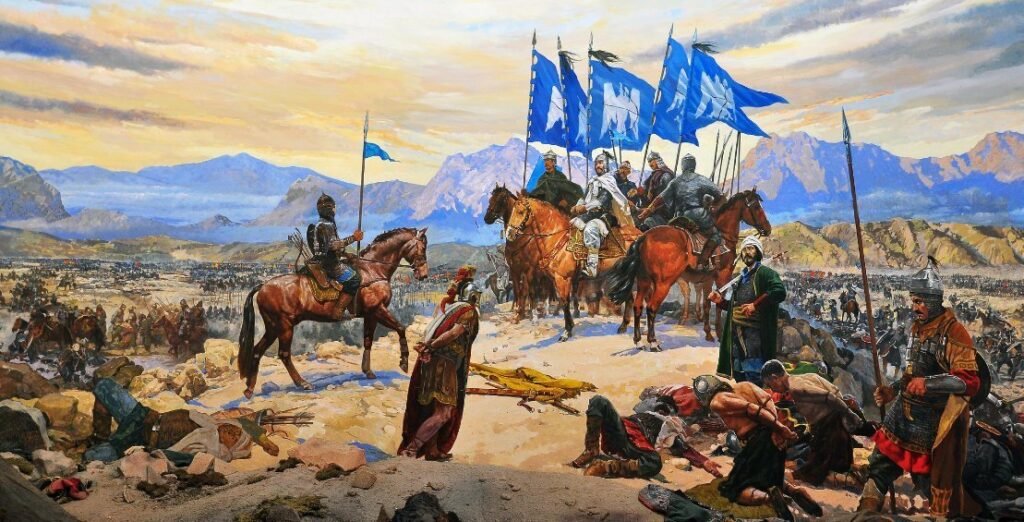
In 1071, the Battle of Manzikert against the Seljuk Turks marked a severe blow. Anatolia — the empire’s military backbone — began to fragment.
Civil wars followed. Military aristocrats competed for power. Economic strain deepened.
The empire’s structural resilience began to erode.
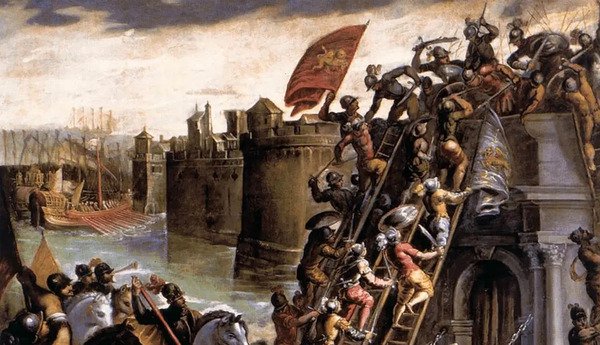
The Fourth Crusade: The Latin Catastrophe
In 1204, Western Crusaders diverted from their original mission and sacked Constantinople.
The city was looted. Churches desecrated. Relics stolen.
The empire fragmented into successor states:
- Nicaea
- Trebizond
- Epirus
Although Constantinople was recaptured in 1261, the damage was irreversible. The empire never regained its former strength.
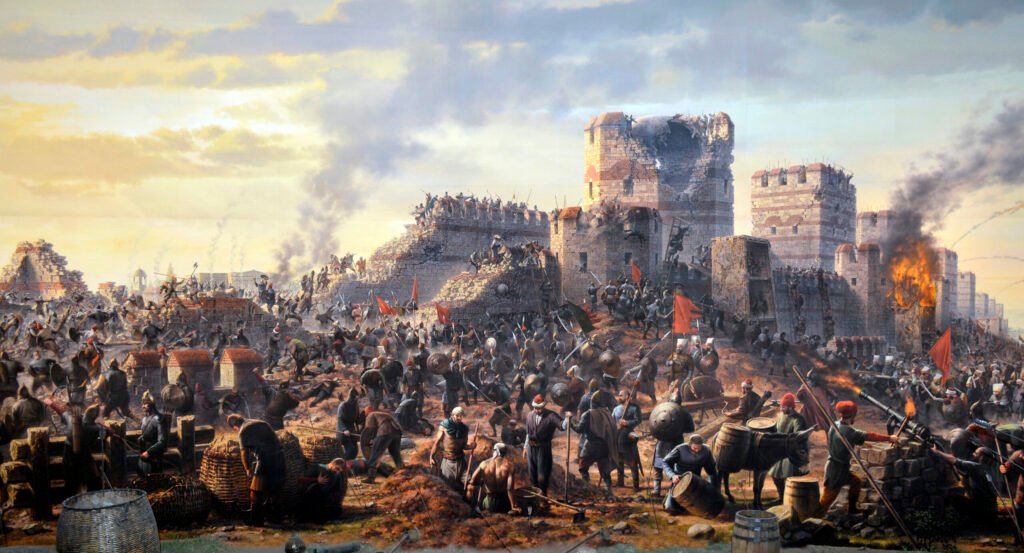
The Final Century and the Ottoman Conquest
By the 15th century, the empire was reduced largely to Constantinople and parts of Thrace and Greece.
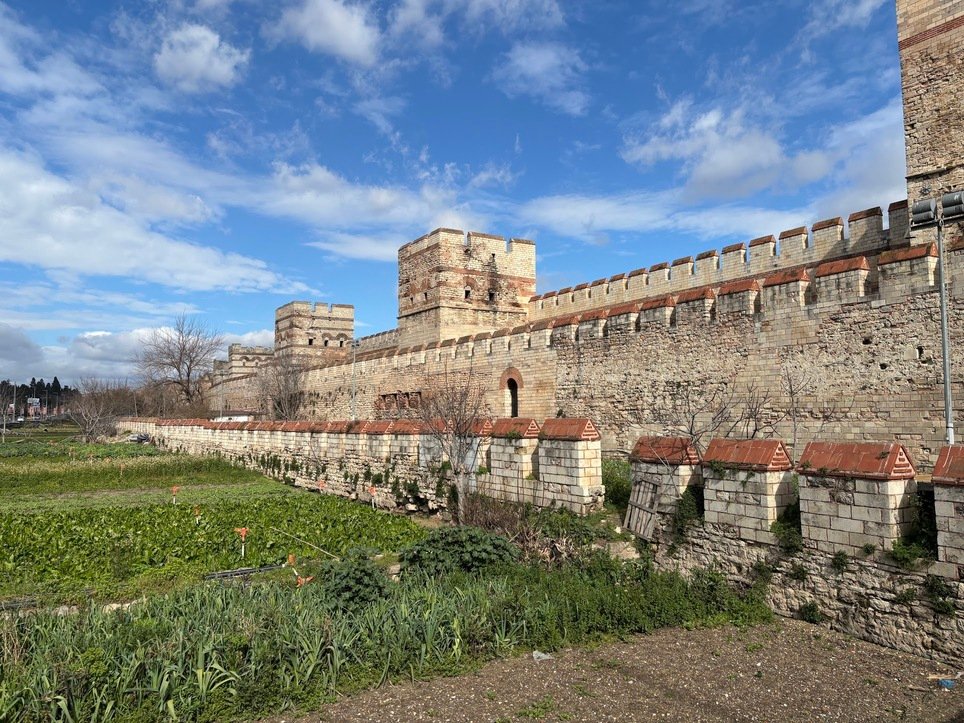
The last emperor, Constantine XI Palaiologos, ruled a diminished but symbolically powerful state. On May 29, 1453, Mehmed II captured Constantinople after a 53-day siege. Massive cannons breached the Theodosian Walls.
Constantine XI died fighting.
The Eastern Roman Empire ended — but its legacy did not.
Legacy of the Eastern Roman Empire
The Byzantine legacy includes influence across:
- The Balkans
- Russia
- Eastern Europe
- The eastern Mediterranean
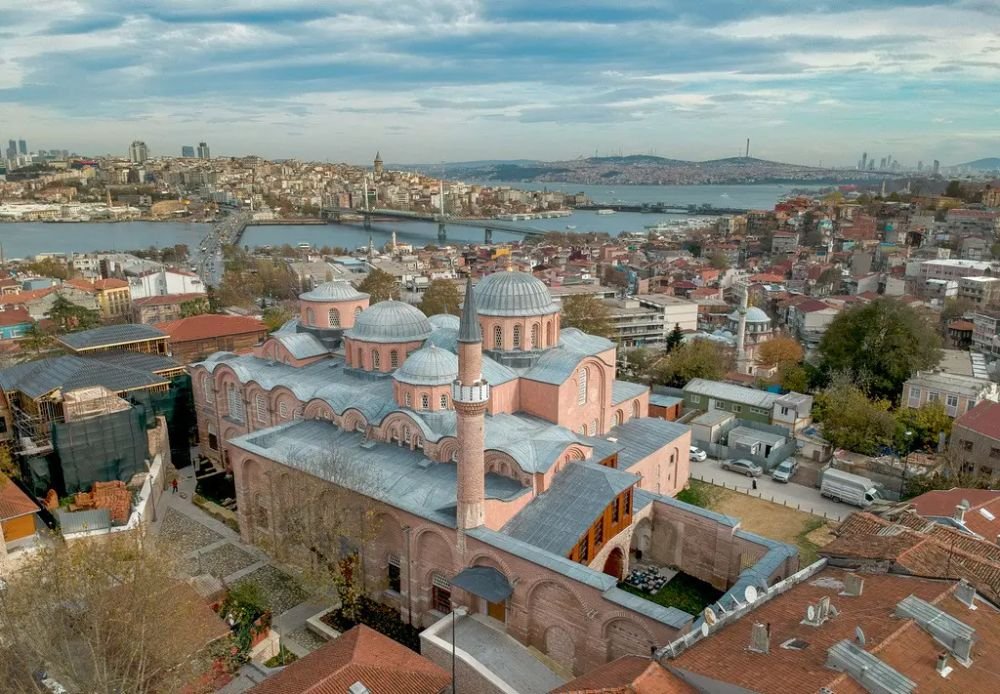
It shaped Orthodox Christianity from Greece to Russia. It influenced the administrative traditions of the Ottoman Empire. Modern Istanbul still carries this layered inheritance.
Why the Eastern Roman Empire Still Matters
The Eastern Roman Empire was:
- A bridge between antiquity and medieval Europe
- A buffer between Islamic polities and Western Europe
- A laboratory of imperial governance
- The longest-lasting Roman state in history
It was not a “mysterious medieval empire.” It was Rome — transformed, resilient, and adaptive.
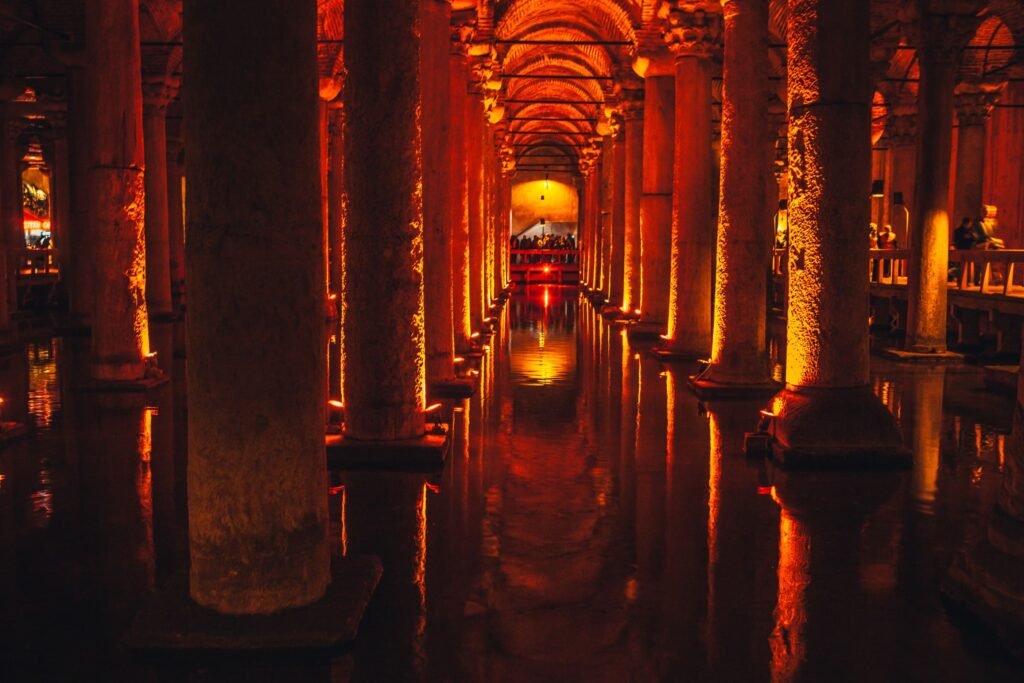
Discover Byzantine History in Istanbul
Today, visitors to Istanbul can still experience the physical remnants of this civilization:
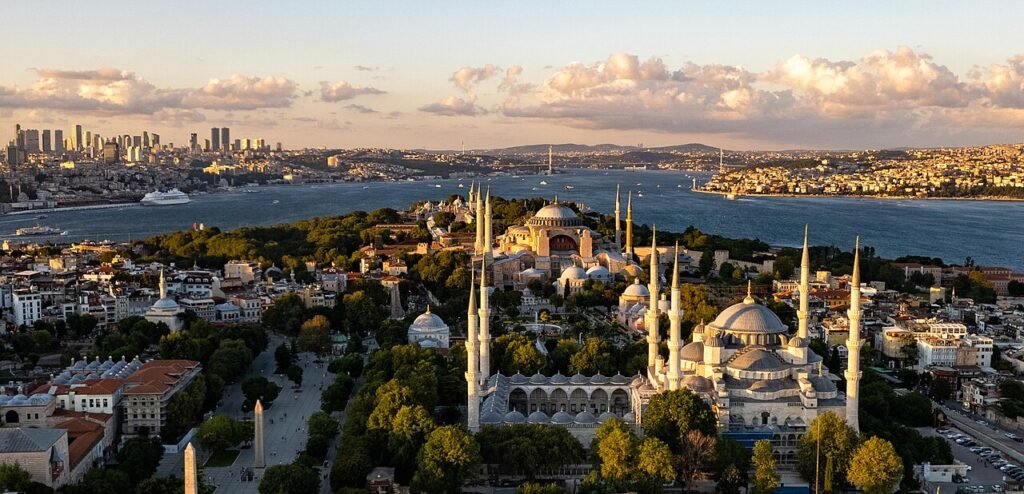
- Hagia Sophia
- The Theodosian Land Walls
- The Hippodrome
- Underground cisterns
- Byzantine churches converted into mosques
Understanding these monuments requires historical context — the political struggles, theological debates, and imperial ambitions that shaped them.
If you want to explore the Eastern Roman legacy in depth, GateToTürkiye offers curated historical experiences that go beyond monuments — into the structures of power, faith, and daily life that defined the empire.
Final Perspective
From Constantine to 1453, the Eastern Roman Empire endured plague, invasions, crusades, and internal revolutions. It reinvented itself repeatedly without abandoning its Roman identity.
It was neither merely Roman nor merely medieval Greek. It was a civilization that sustained imperial governance for over a millennium — a rare phenomenon in world history.
And its capital, Constantinople — today’s Istanbul — remains one of the most historically layered cities on earth.
Tagged with :