


Anatolia
36 Minute
The Great Mosque and Hospital of Divrigi: Türkiye’s Hidden Masterpiece

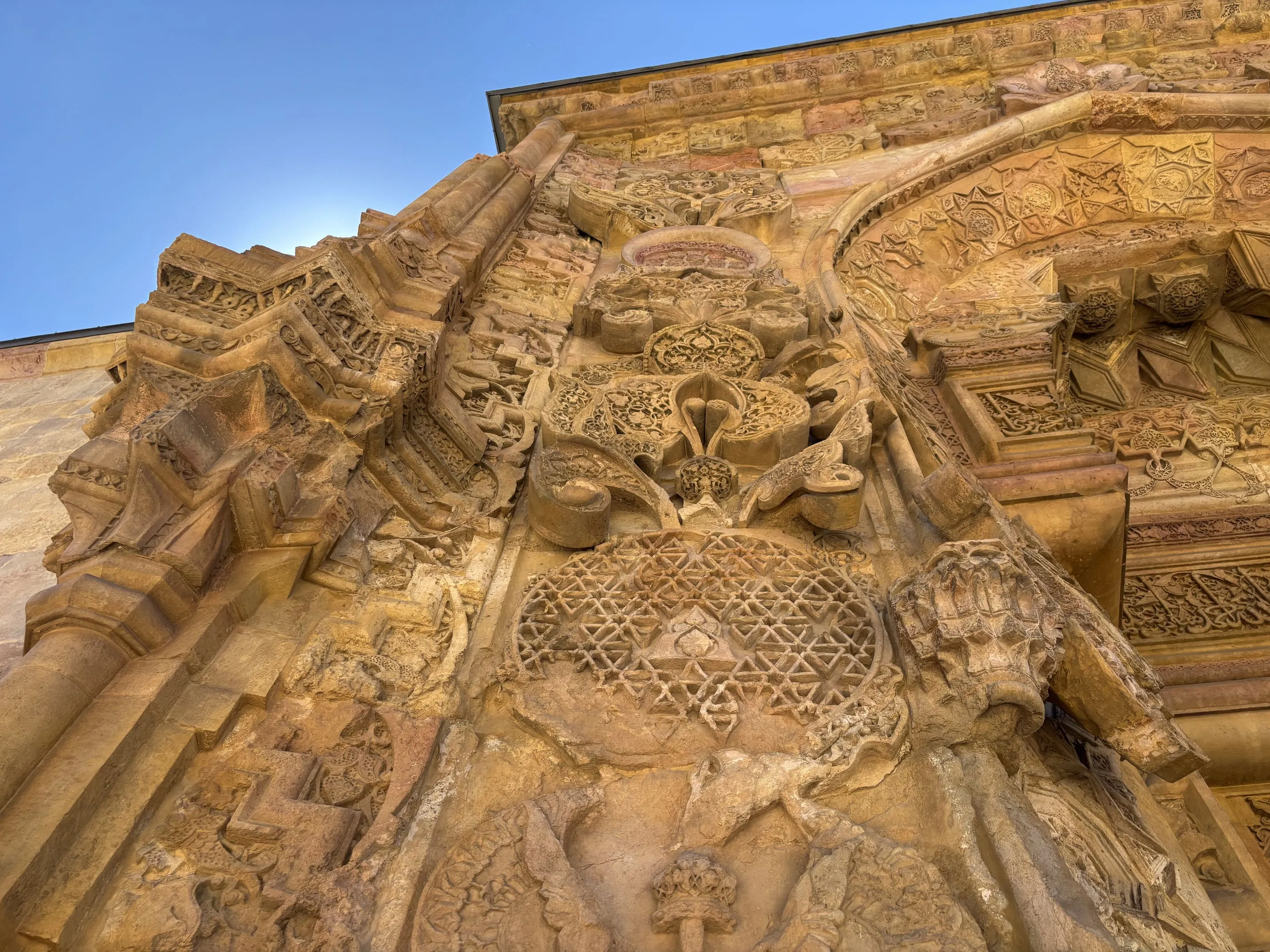
Hidden among the mountains of Sivas Province, the Divriği Great Mosque and Hospital is one of medieval Anatolia’s most extraordinary monuments.
At first glance, the complex appears almost severe, with massive stone walls rising beneath Divriği Castle. Come closer, however, and the stone seems to come alive. Leaves, stars, geometric patterns, calligraphy, and deeply carved forms cover its monumental portals, changing continuously with light and shadow.
Built in 1228–29, the complex combines a mosque and a Darüşşifa — House of Healing. It has been on the UNESCO World Heritage List since 1985, recognized for both its architecture and its exceptional stone craftsmanship.
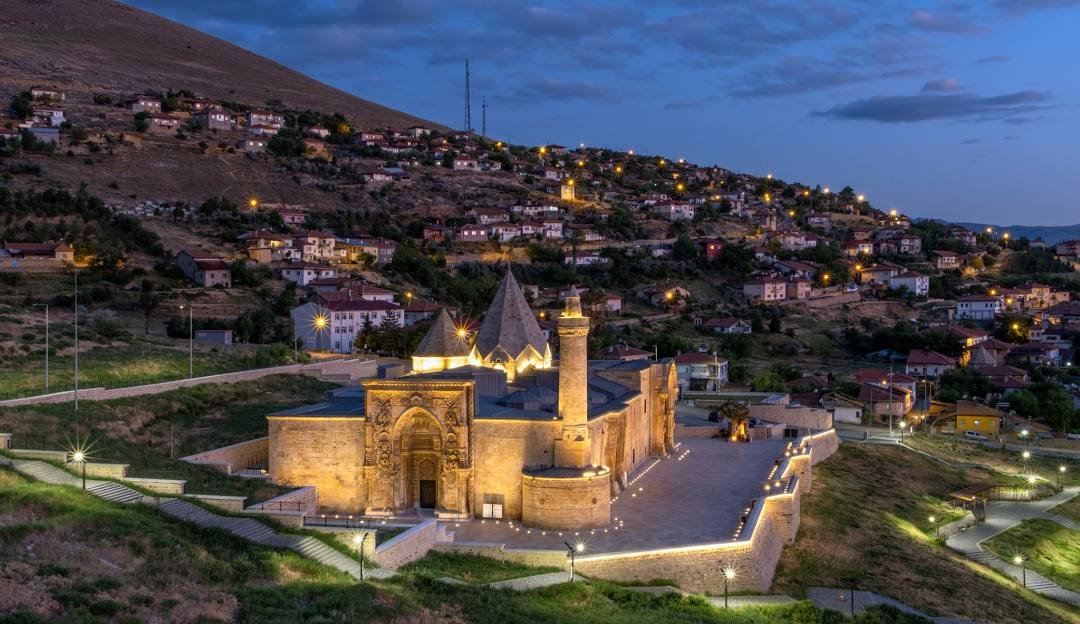
The Great Mosque was commissioned by Ahmed Shah of Divriği, a ruler of the Mengücekid dynasty, while the adjoining hospital was founded by his wife, Turan Melek.
Although Divriği is commonly associated with Seljuk architecture, its patrons were Mengücekids, one of several Turkish principalities that shaped medieval Anatolia.
Their monument reflects the wider cultural world of the period, when Anatolia connected artistic traditions from Iran, Armenia, the Caucasus, Mesopotamia, and Central Asia.
The architect most closely associated with the complex was Hürremşah of Ahlat. Ahlat, on the shores of Lake Van, was already famous for its sophisticated tradition of stone carving, and that craftsmanship reached an extraordinary level at Divriği.
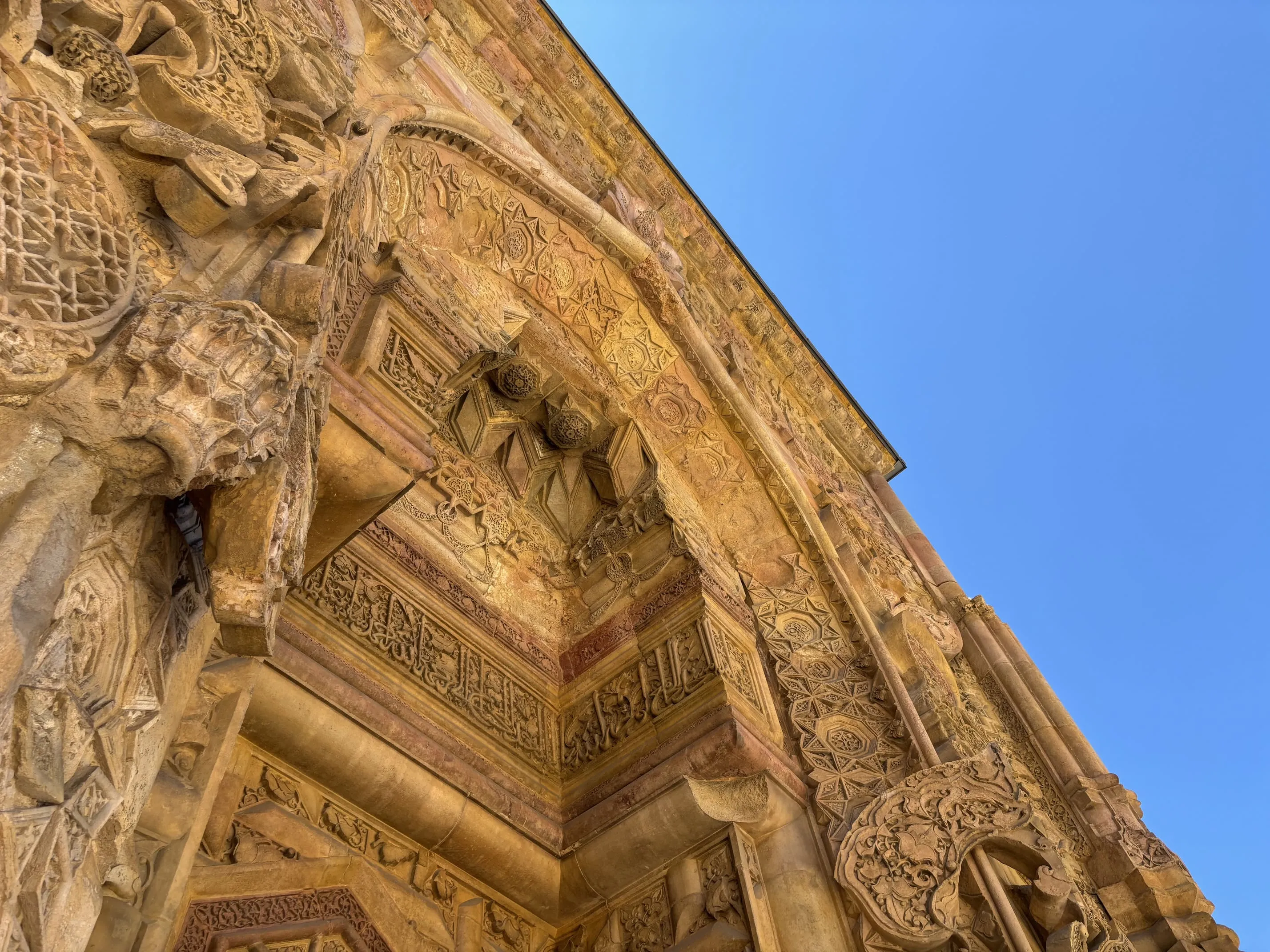
The Four Remarkable Portals
One of the greatest pleasures of visiting Divriği is simply walking around the outside of the complex.
The walls themselves are surprisingly restrained. Then, suddenly, the stonework explodes around the entrances.
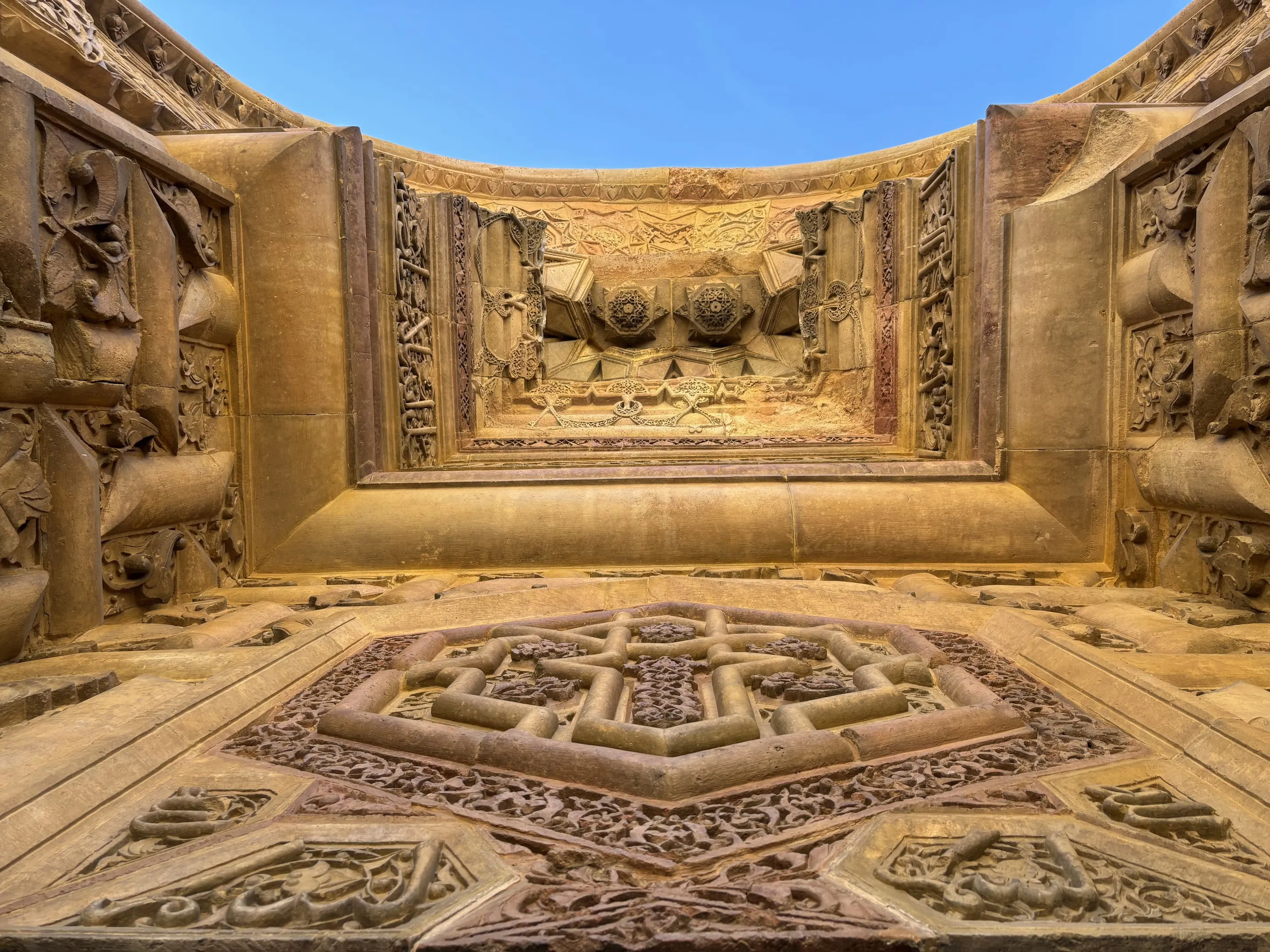
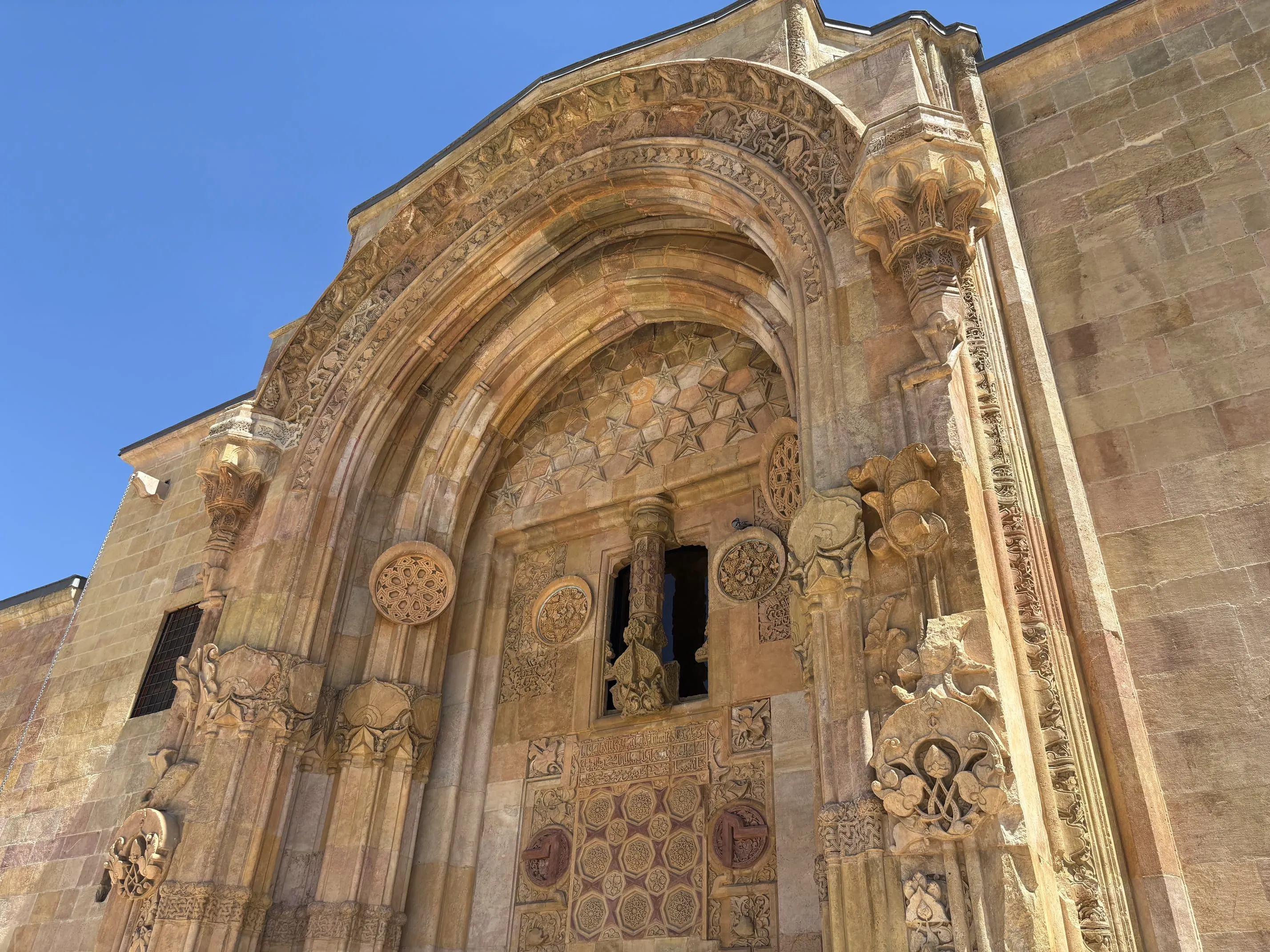
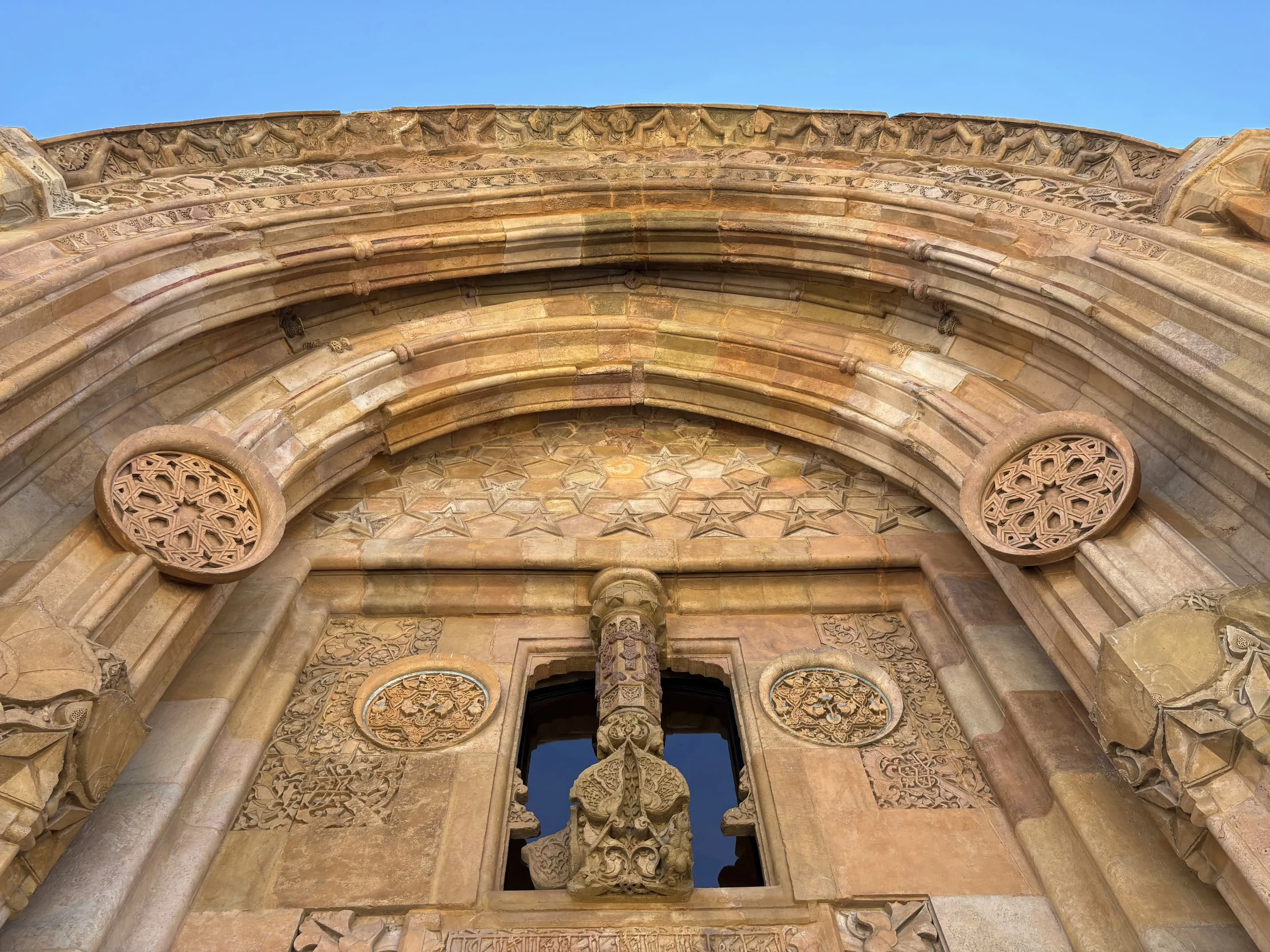
The Great Mosque and Hospital is associated with four distinctive portals, and each was treated almost as a separate work of architecture. Their decoration is three-dimensional, deeply carved and deliberately varied rather than repeated.
The North Portal: The Cennet Kapısı
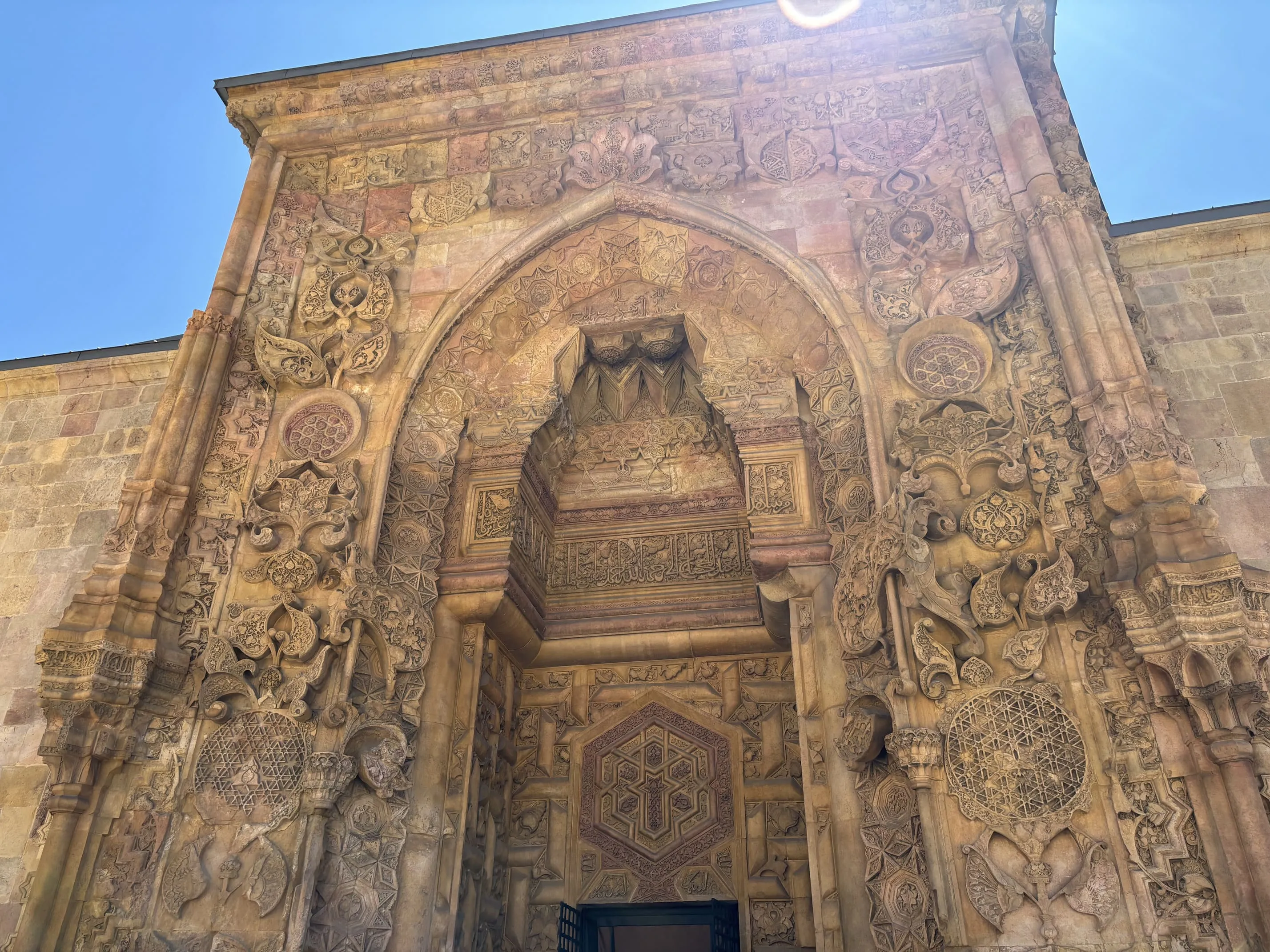
The most monumental entrance of the mosque is its northern portal, commonly known as the Cennet Kapısı — the Gate of Paradise.
Facing toward the castle, it is also sometimes called the Kale Kapısı.
This is Divriği stone carving at its most dramatic. Floral forms, rosettes, curling leaves and geometric compositions project from the surface in layers, creating a portal that seems almost to grow out of the wall.
From a distance there appears to be order and symmetry. Up close, however, the details constantly change.
The portal is especially impressive when sunlight reaches the deep carvings. Shadows collect behind the projecting forms, making the decoration appear almost three-dimensional.
The West Portal: The Tekstil Kapısı
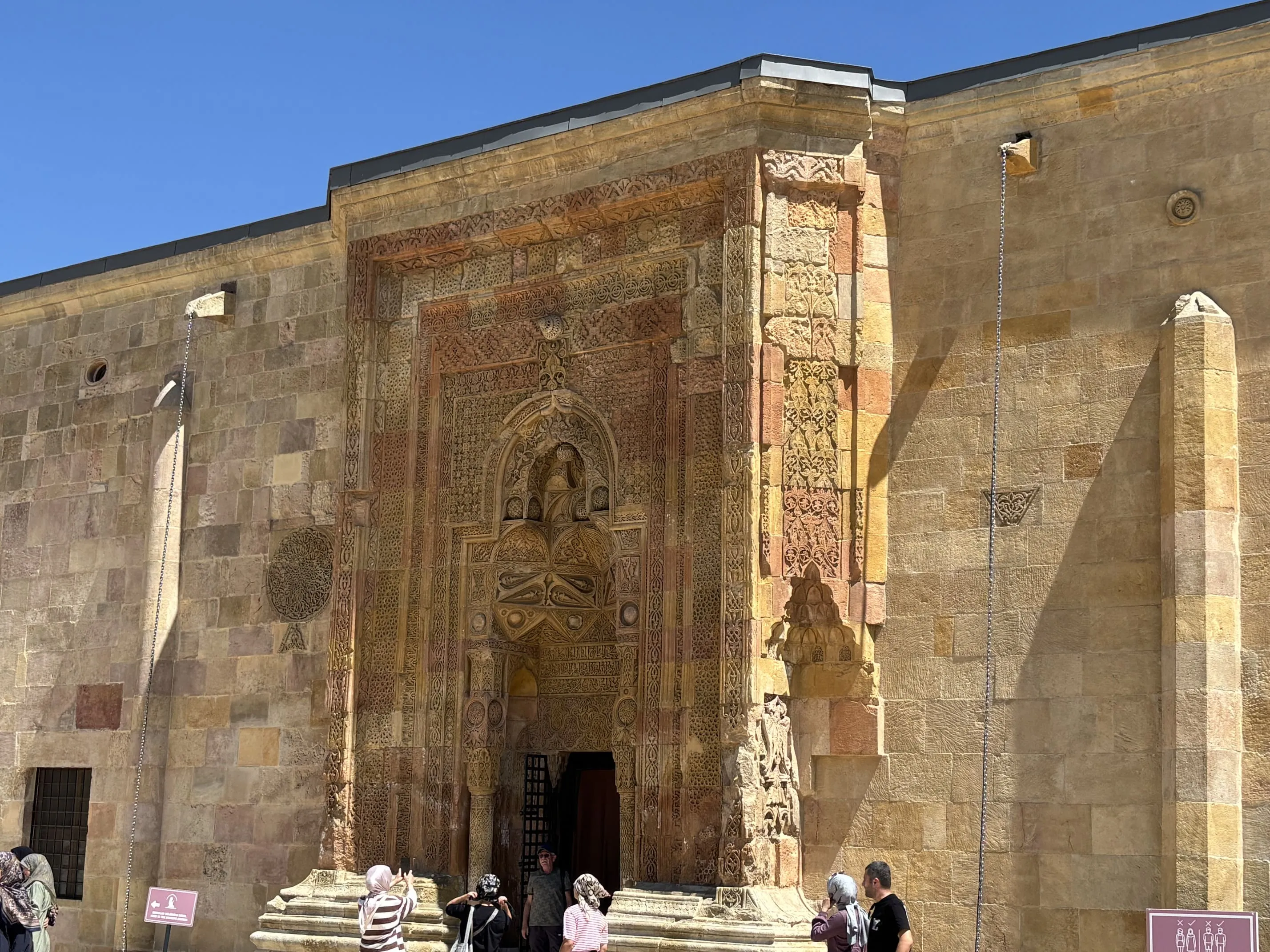
The mosque’s western entrance is very different.
Often called the Tekstil Kapısı — Textile Gate, its decoration has traditionally been compared to the patterns of woven carpets and textiles.
Geometric elements are combined with vegetal motifs and small figurative details, producing a composition that feels finer and more intricate than the massive northern entrance.
This is also the portal most closely associated with Divriği’s famous shadow figures.
At certain times of day, sunlight striking the carvings produces forms that have been interpreted as human silhouettes, including the image of a person standing in prayer.
Whether the medieval craftsmen deliberately calculated these figures remains impossible to prove.
But standing here and watching sunlight move across the stone makes it easy to understand why the stories developed.
The Shah Portal
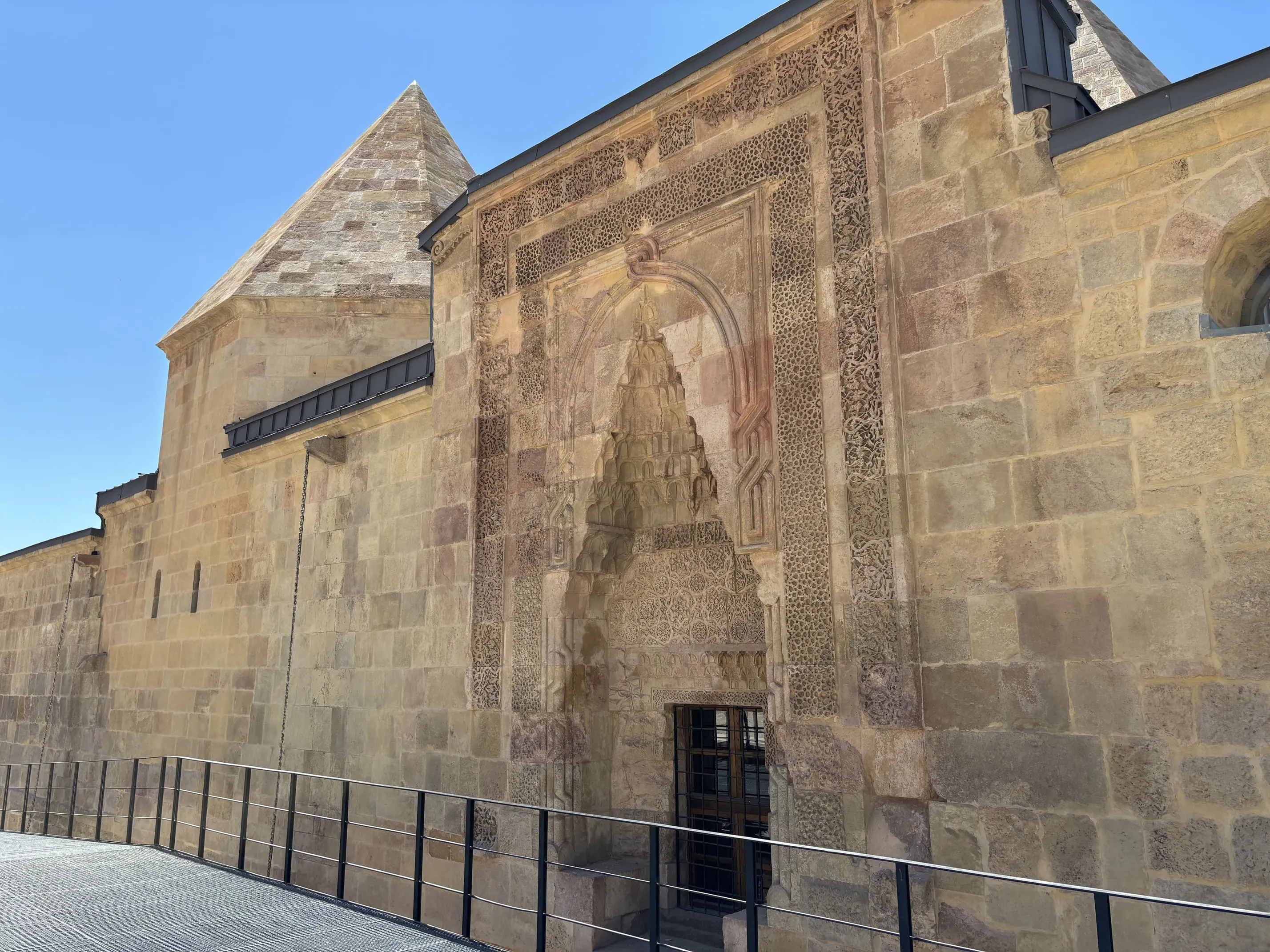
On the eastern side is the smaller entrance traditionally known as the Şah Kapısı, or Shah Portal.
Compared with the great northern and western portals, it is considerably more restrained. It is traditionally associated with the private area used by the ruler.
There is even some scholarly debate over whether the original opening should technically be understood as a portal or as an unusually elaborate opening connected with the royal prayer space.
Whatever its exact architectural interpretation, its difference in scale is striking.
The monumental entrances announce the building publicly.
The Shah Portal feels more private.
The Darüşşifa Portal
Beside the mosque stands another entrance altogether: the monumental portal of the Darüşşifa.
Its proportions and sculptural treatment immediately announce that the hospital was not an insignificant addition to the mosque.
It was architecture worthy of its own monumental entrance.
Deep geometric carving, vegetal forms and powerful architectural framing surround the doorway. Like the other portals, it seems almost detached from the relatively plain wall behind it.
Standing before these entrances one after another is perhaps the best way to understand Divriği.
The craftsmen clearly had the ability to repeat a successful design.
They chose not to.
Each doorway was given its own character.
Inside the Great Mosque
After the visual intensity of the portals, entering the mosque produces an immediate change in atmosphere.
The exterior is about sculpture and sunlight.
The interior is about stone, structure and shadow.
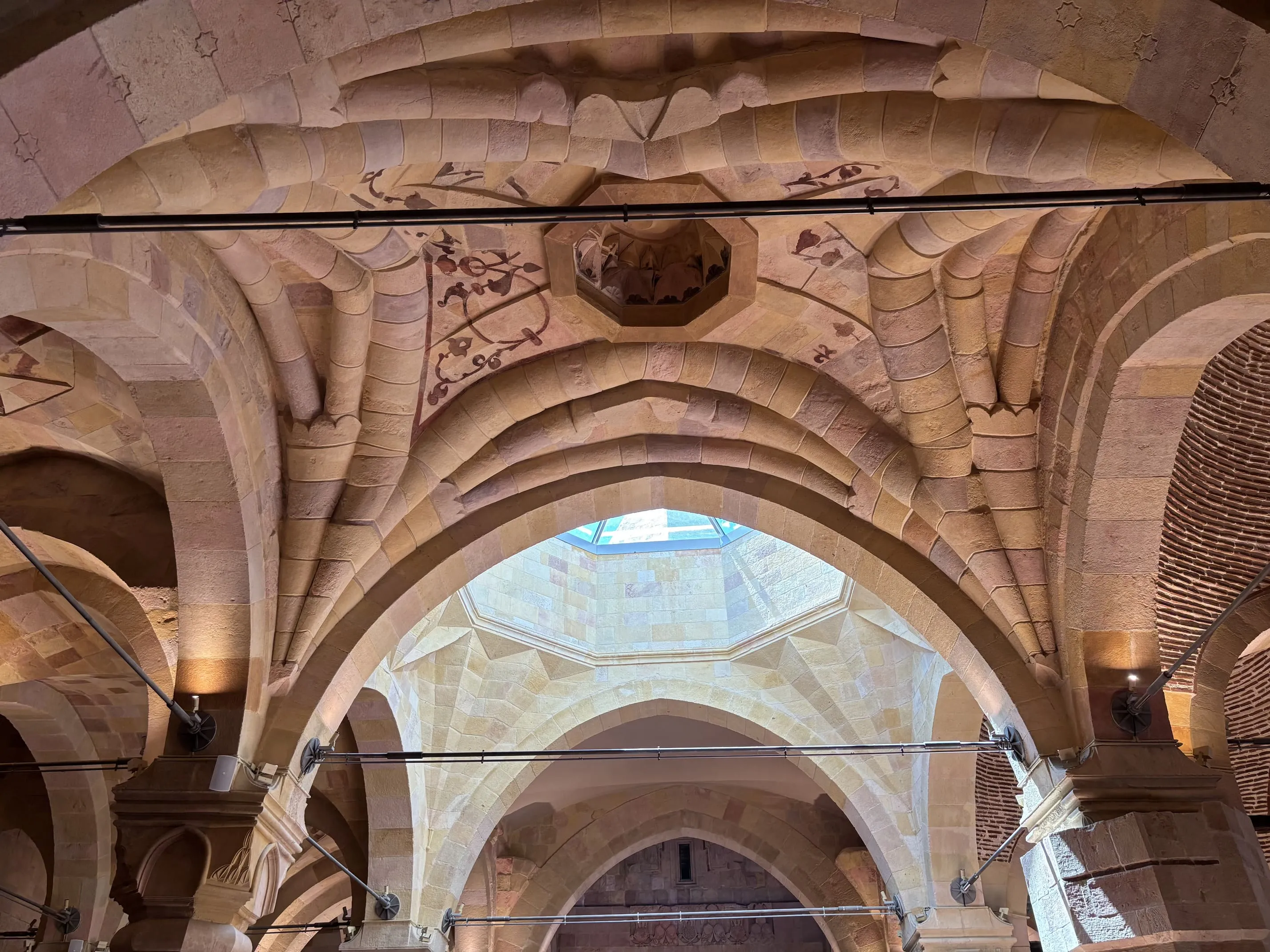
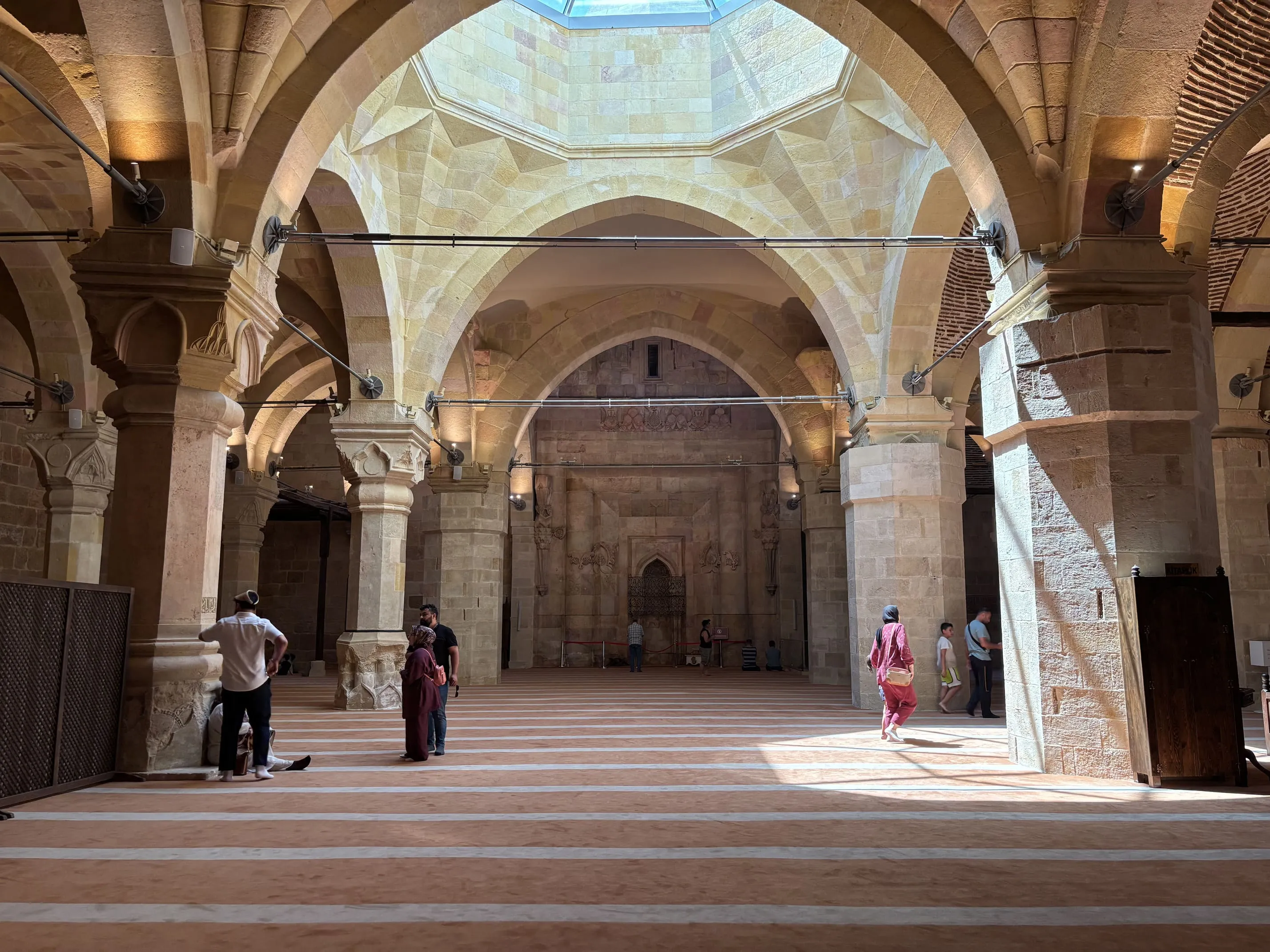
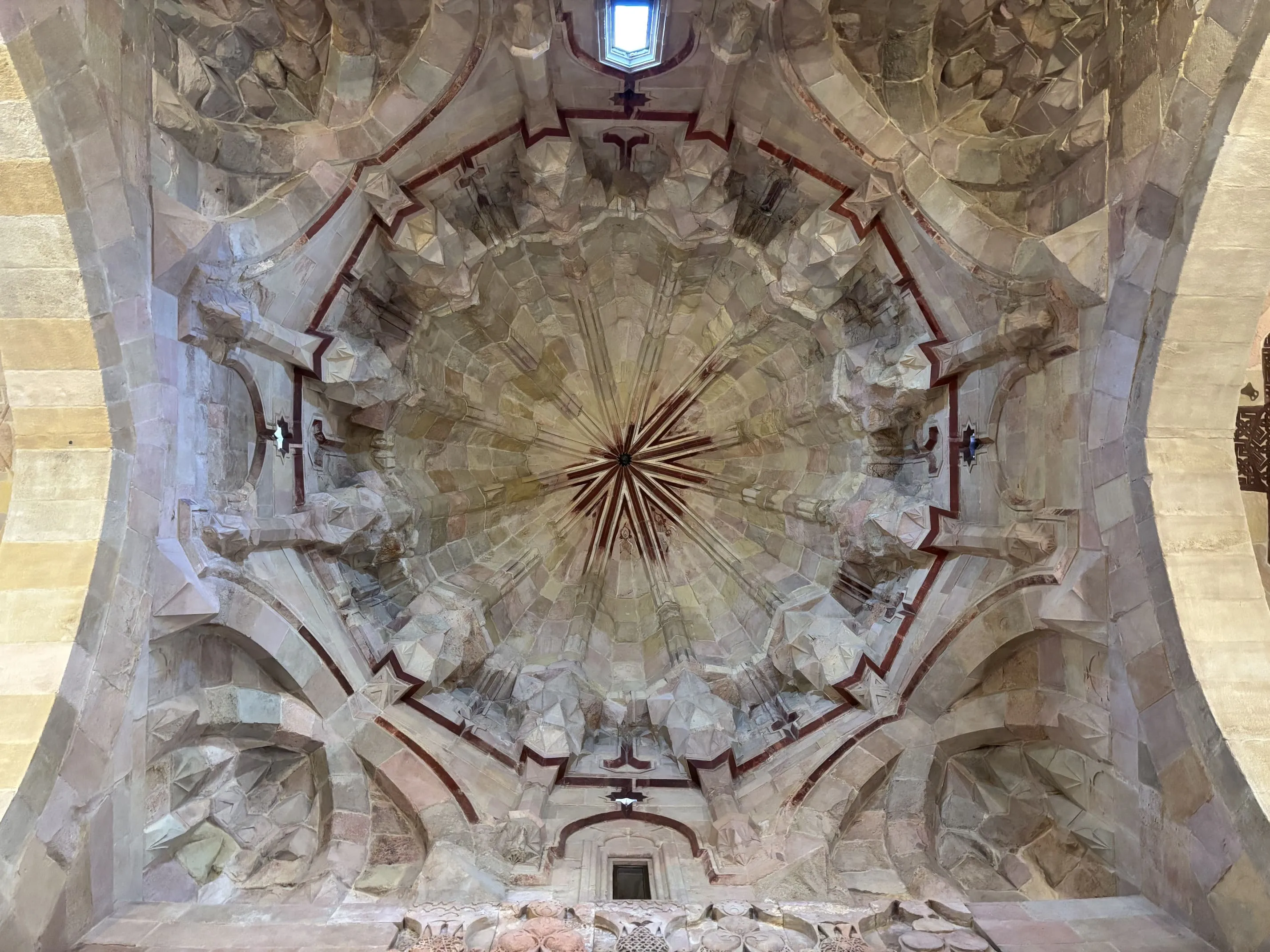
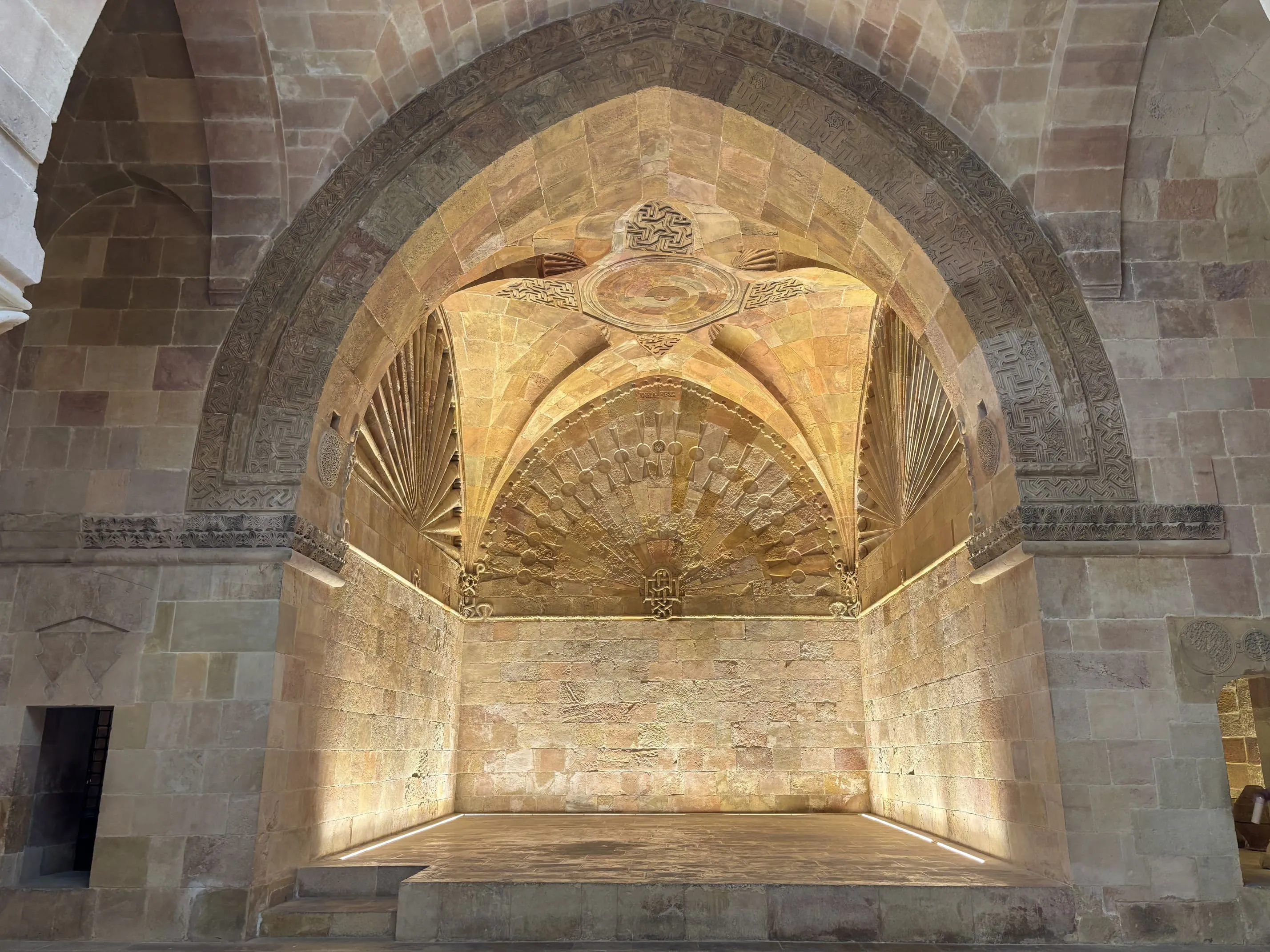
The mosque is an enclosed hypostyle prayer hall divided by massive piers into five naves. Above them rises one of the most remarkable elements of the building: an extraordinary variety of stone vaults and domes.
Looking upward becomes essential.
Rather than repeating the same ceiling form across the prayer hall, the builders created a succession of different vaulting arrangements. The architecture changes as you move through the building.
Columns, capitals and bases also carry different decorative treatments.
This gives the mosque an unusual rhythm. It does not feel as though one architectural module has simply been copied again and again.
It feels composed.
The interior is also very different from the great Ottoman mosques that many visitors encounter elsewhere in Türkiye.
There is no enormous central dome creating a single open volume.
Divriği is heavier, more intimate and more mysterious.
The massive piers divide the interior into smaller spatial experiences, while changing levels of light gradually draw attention toward the mihrab.
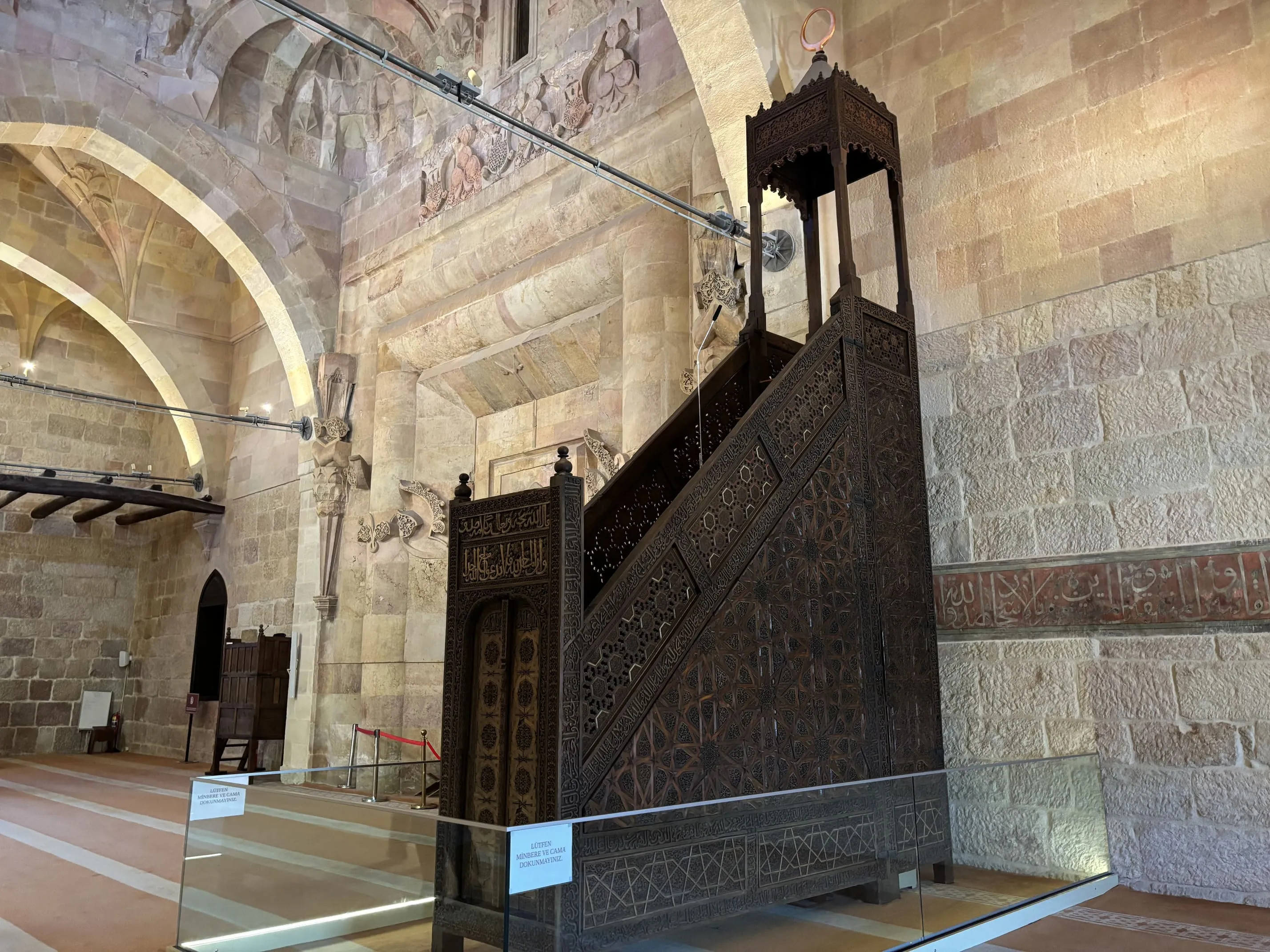
The mosque’s extraordinary wooden minbar adds another artistic layer. Its carved geometric decoration demonstrates that the craftsmen working at Divriği were masters not only of stone but also of wood.
This is one of those interiors where a visitor should resist the temptation to simply walk toward the mihrab and turn around.
Look upward.
Look between the piers.
Look at the vaults individually.
Much of Divriği’s genius is above your head.
The Darüşşifa: Architecture for Healing
Directly attached to the mosque is the Darüşşifa, the medieval House of Healing commissioned by Turan Melek.
Entering it feels different again.
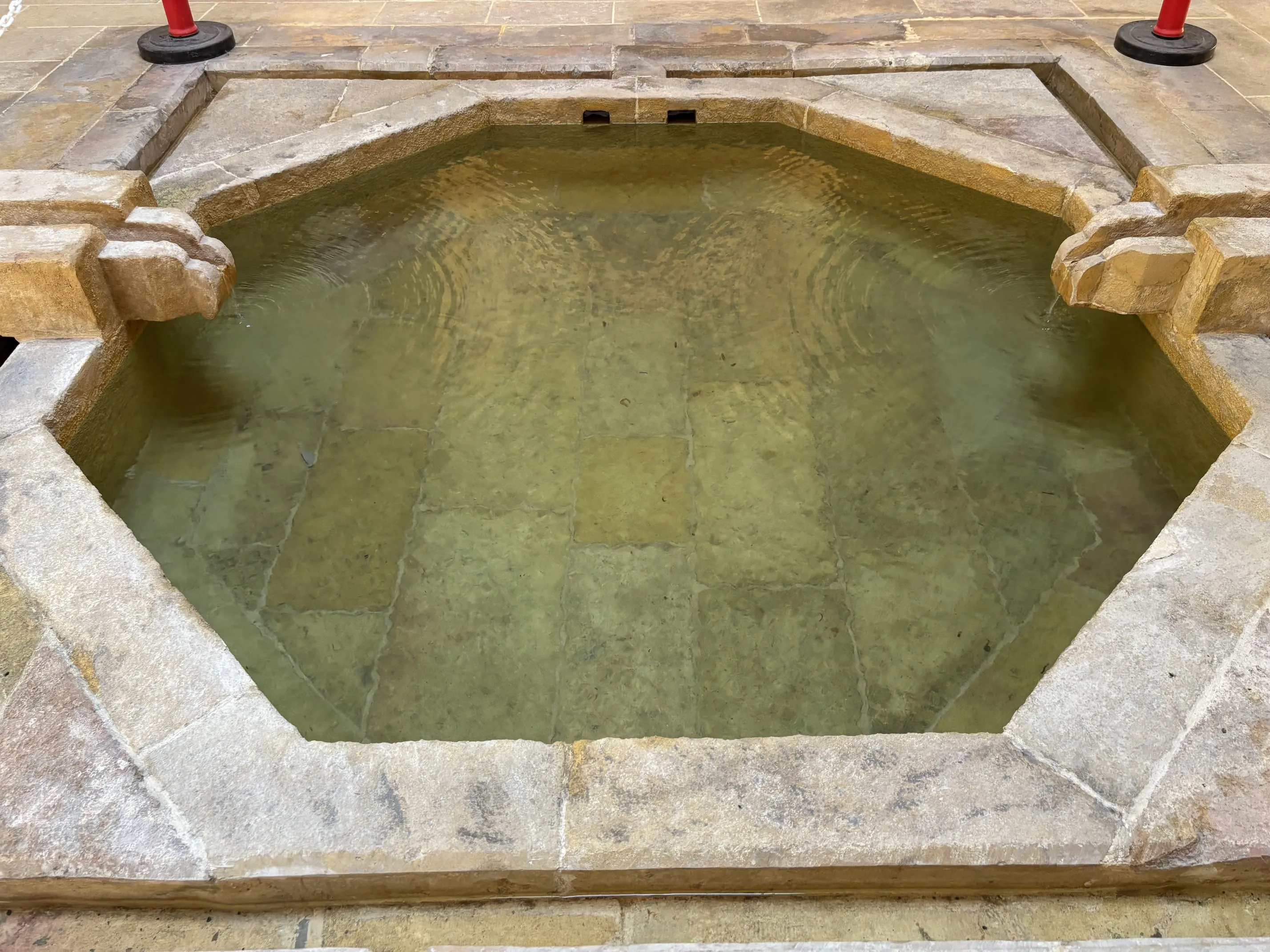
The hospital is organized around a dramatic central space with rooms arranged around it. Above, daylight enters through an opening in the roof, while a pool occupies the center below.
The interaction between water, stone, light and sound immediately changes the atmosphere.
Voices travel through the interior.
Footsteps echo differently.
The sound of water becomes part of the experience of the building.
For this reason, Divriği has long been associated with stories of healing through water, music and acoustics.
Such ideas certainly existed within the broader medical traditions of the medieval Islamic world. At Divriği itself, however, it is difficult to reconstruct exactly how sound or music may have been used as treatment.
There is no need to exaggerate it.
The architecture already tells us something important.
This was not simply a collection of rooms where sick people were placed.
Attention was paid to space, light, water and atmosphere.
The Darüşşifa therefore gives us a glimpse into a medieval understanding of healthcare that included the environment surrounding the patient.
It also makes the complex particularly unusual.
On one side stood a place devoted to prayer.
Beside it stood a place devoted to healing.
Together they formed part of the same vision of public life.
The Bekir Çavuş Hamamı and the Heating Story
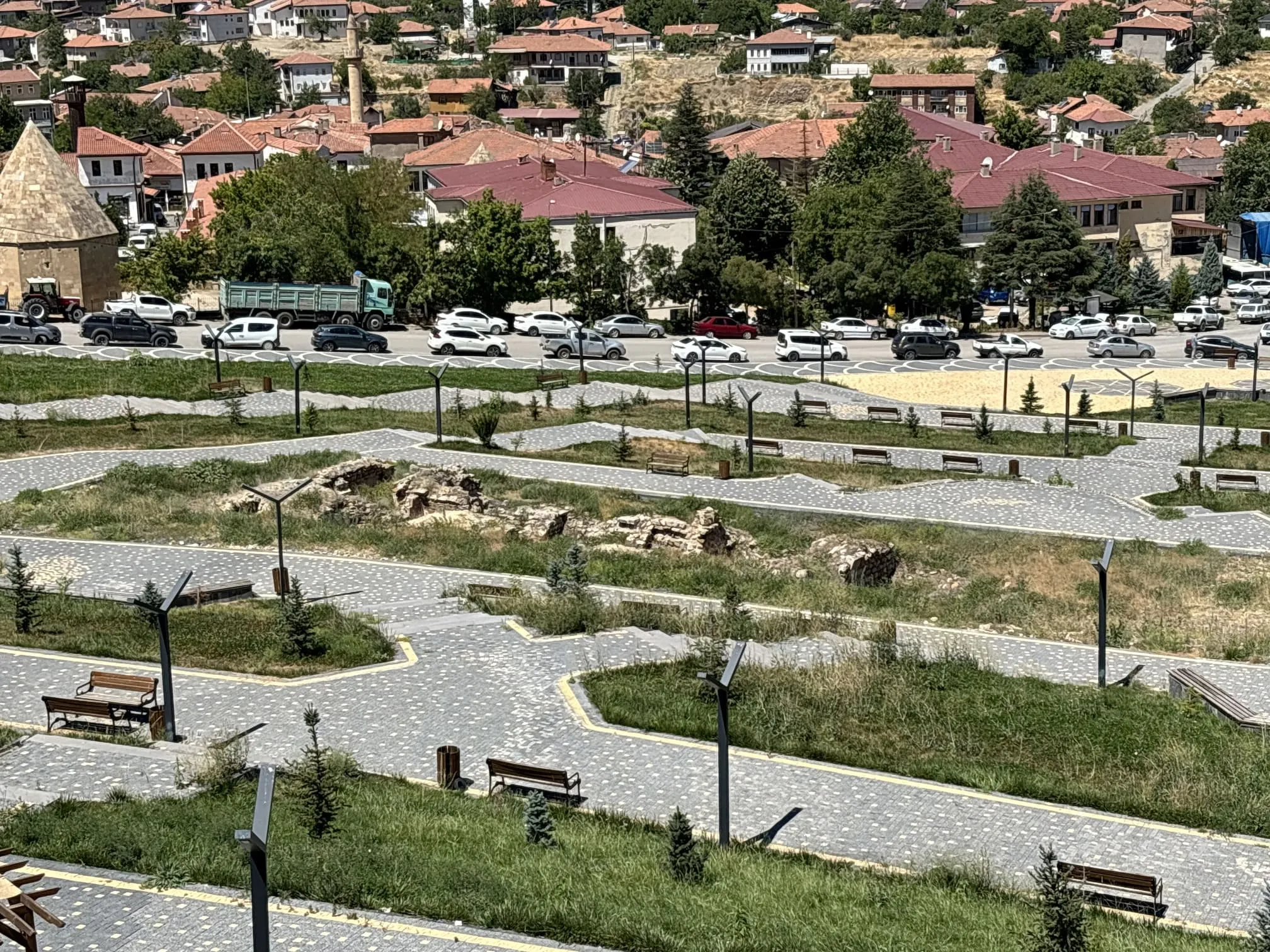
A short distance from the Great Mosque stand the remains of the Bekir Çavuş Hamamı, historically known as Hamam-ı Bâlâ.
Located about 100 metres west of the complex, the bath is associated with the Mengücekid period. Like other medieval hammams, it relied on a system of fire, hot air, water, and underfloor heating.
A long-standing local interpretation suggests that heat from the bath may also have contributed to warming the nearby Great Mosque and Darüşşifa. The exact engineering connection is still debated, but the idea adds another fascinating layer to Divriği.
More importantly, the hammam reminds us that the mosque and hospital were part of a living medieval town, surrounded by the infrastructure of everyday urban life.
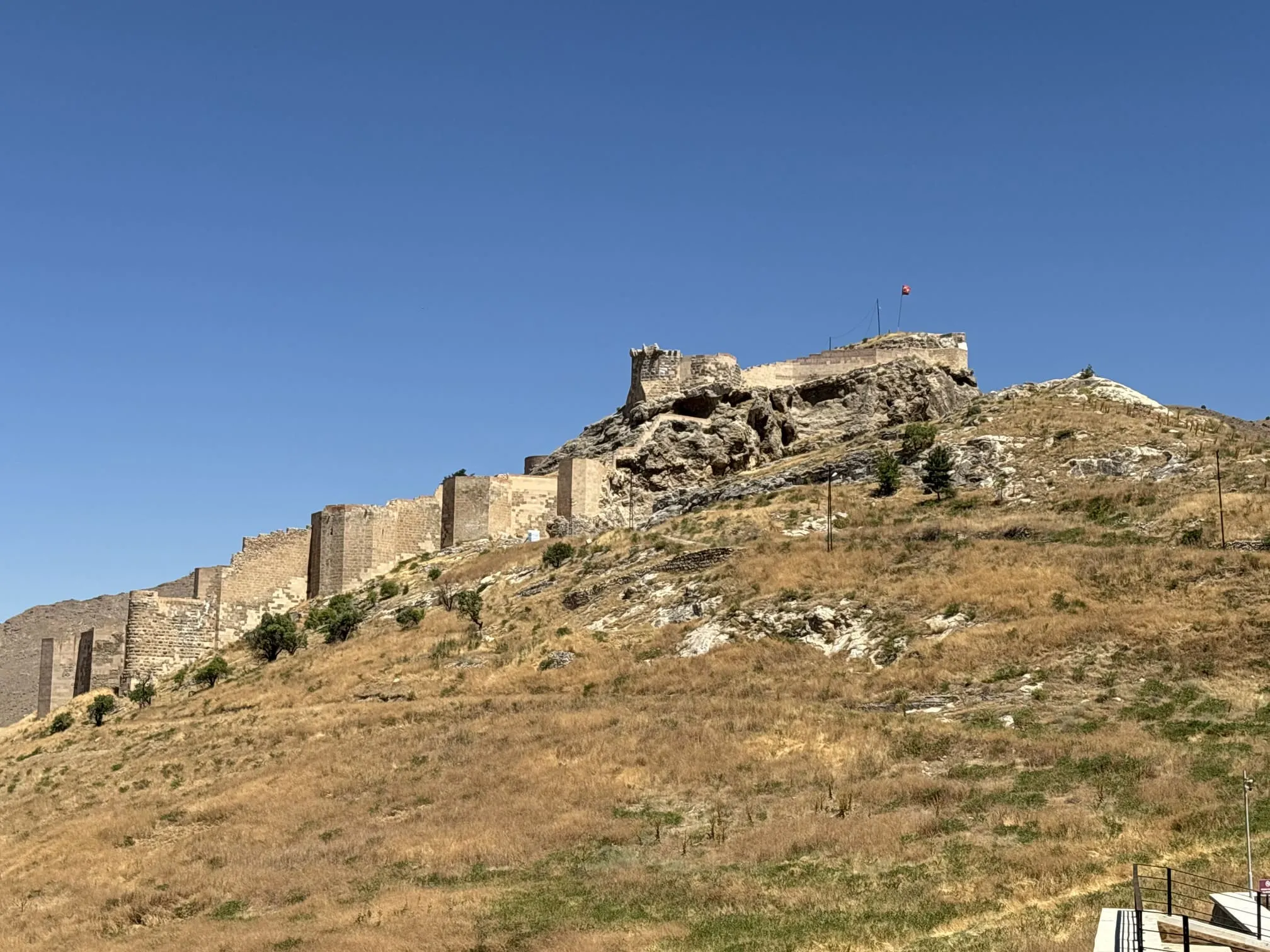
Divriği Castle: Above the Great Mosque
Rising above the Great Mosque and Hospital, Divriği Castle dominates the rocky slope overlooking the Çaltı Valley.
The site was already an important fortified center before the Great Mosque was built. Much of the surviving castle reflects the Mengücekid period, although the history of the settlement reaches further back.
Inside the castle stands the Kale Mosque, commissioned in 1180 by Emir İshak, several decades before the Great Mosque below.
Together, the castle, mosque, Darüşşifa, and hammam reveal Divriği as more than the setting of a single masterpiece.
The castle represented power and defense, the mosque faith and patronage, the Darüşşifa care and charity, and the hammam the rhythms of daily urban life.
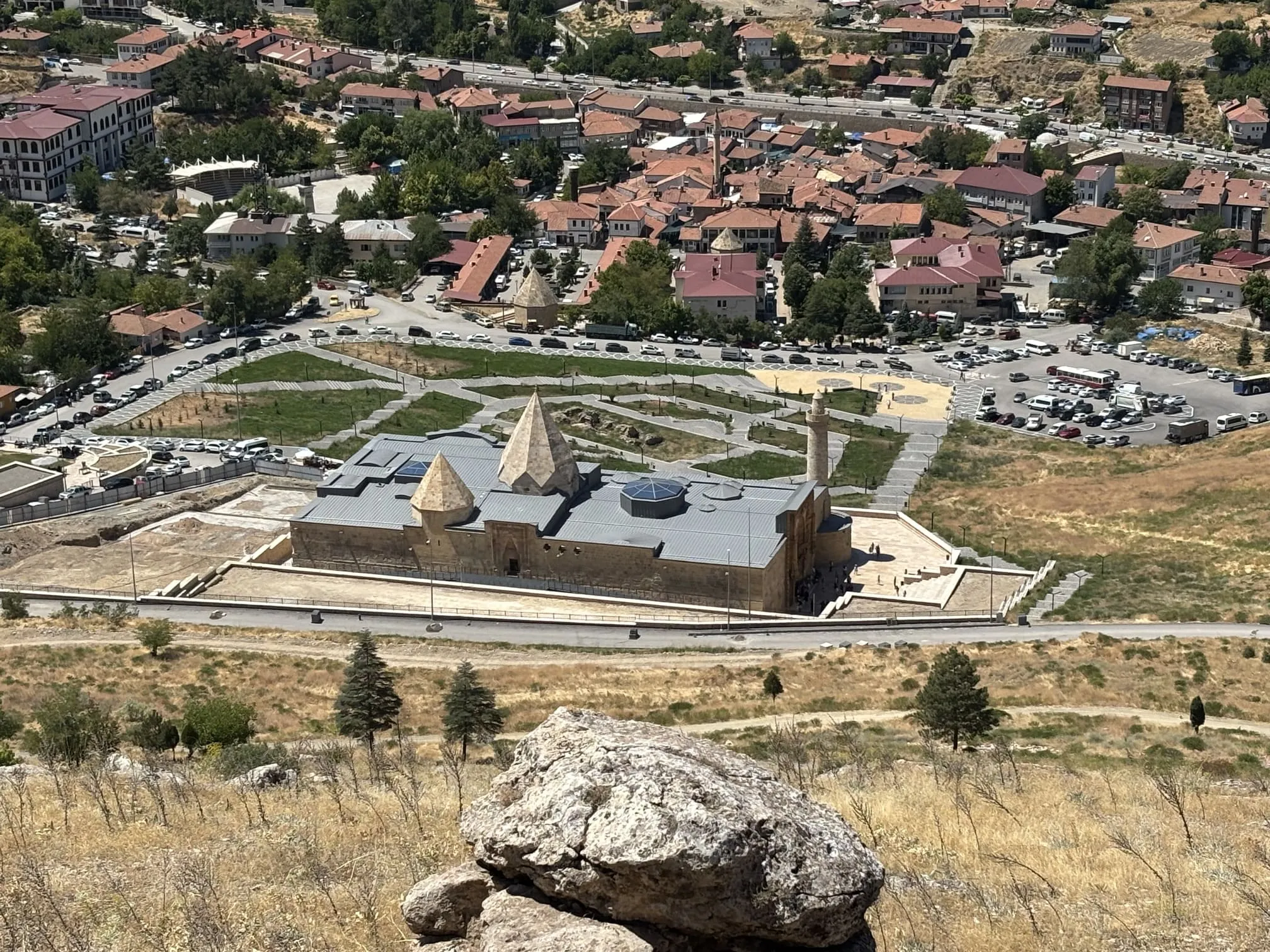
Why Divriği Is a UNESCO World Heritage Site
The Great Mosque and Hospital of Divriği was inscribed on the UNESCO World Heritage List in 1985.
Its importance lies not simply in its age.
Many buildings in Anatolia are older.
What makes Divriği exceptional is its originality.
Its deeply sculpted portals, complex stone vaulting, remarkable variety of decoration and combination of a monumental mosque with an adjoining hospital have few close parallels.
The building demonstrates just how experimental medieval Anatolian architecture could be.
Following a major restoration campaign that began in 2015, the complex reopened to worship and visitors in May 2024, making it possible once again to experience both the interior and exterior as a complete architectural ensemble.
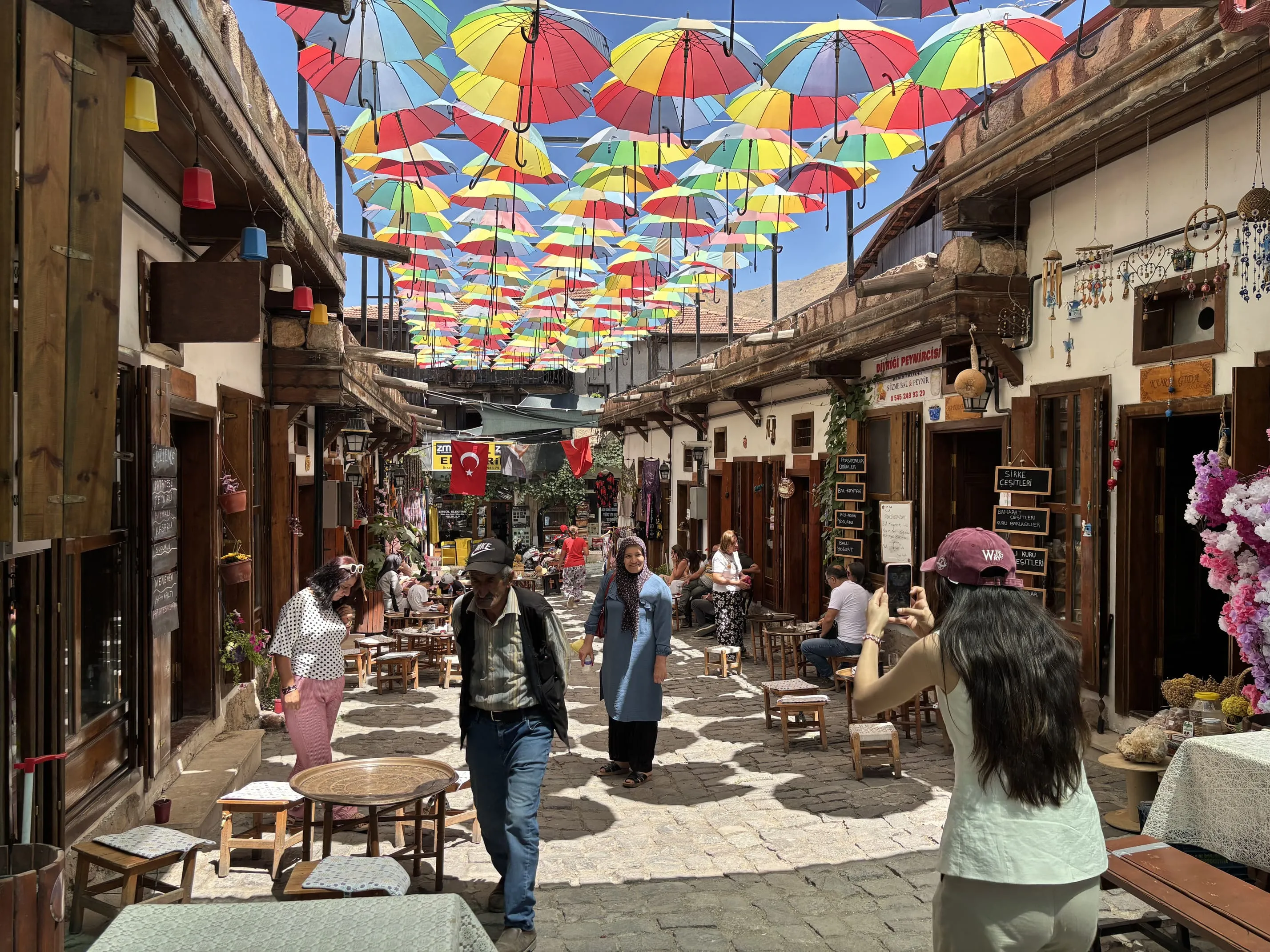
Why Divriği Matters
Divriği may seem remote today, but medieval Divriği was connected to a much wider world linking Anatolia, Iran, Armenia, the Caucasus, Mesopotamia and Central Asia.
Those connections can be seen in its craftsmen, architecture and decoration. Together, the Great Mosque, Darüşşifa, four portals, hammam and castle preserve an unusually complete picture of medieval Anatolian urban life.
For travelers interested in Seljuk-era architecture, the Mengücekids, stone craftsmanship and places beyond Türkiye’s standard routes, Divriği is one of the country’s most rewarding destinations.
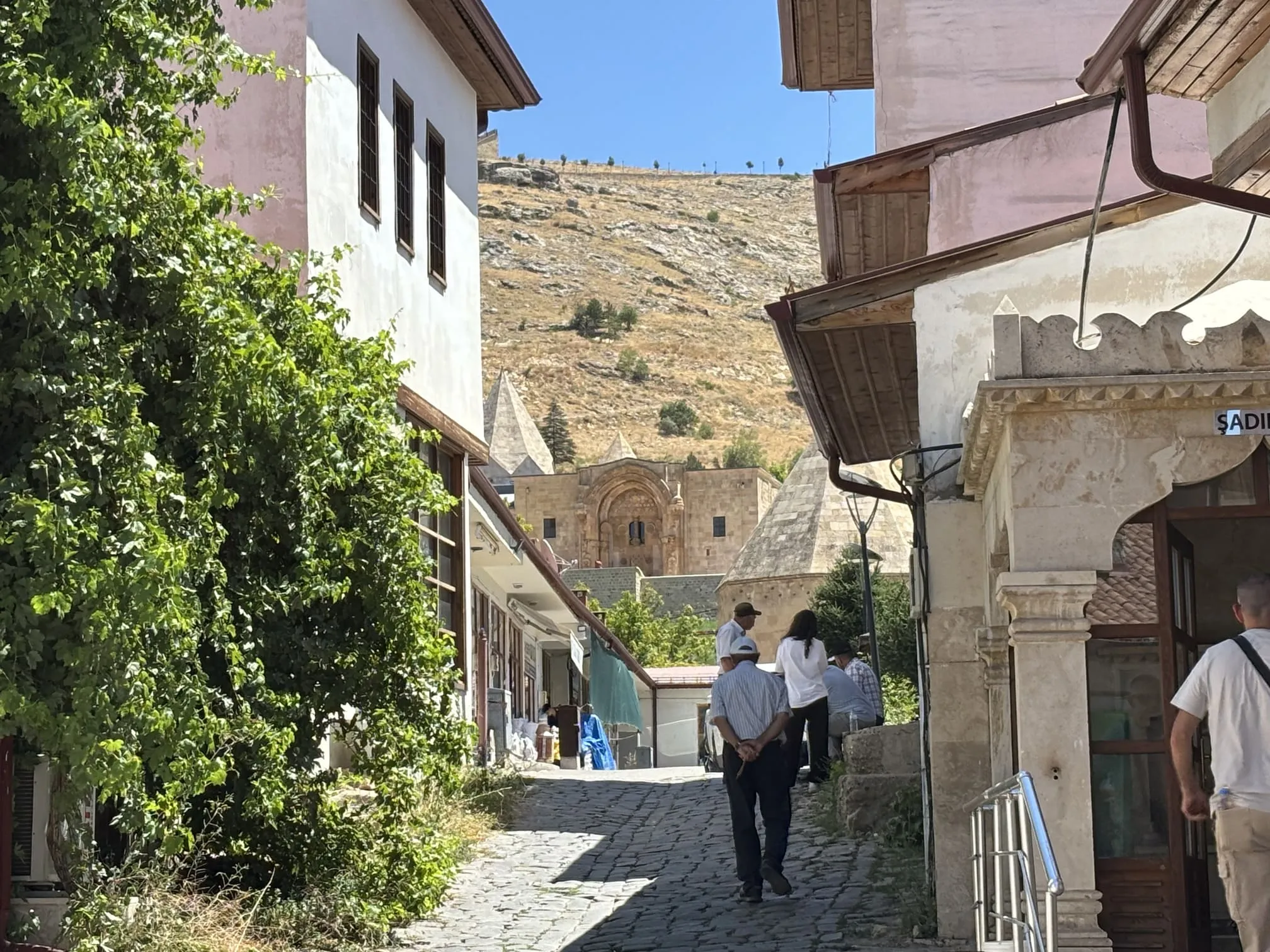
Experience Divriği with Gate to Türkiye
At Gate to Türkiye, we place Divriği within the wider history of Sivas and medieval Anatolia, rather than treating the Great Mosque as an isolated monument.
A private journey can combine the mosque, Darüşşifa, portals, hammam and castle with the region’s historic towns, archaeological sites, landscapes and local culture.
Have your own route in mind? Get in touch with us and let’s build it together.
Get In Touch
Tagged with :